Quotessence
Home / Quotes / Quote by Jack London

Quote by Jack London

“The surpluses will have to be expended somehow, and trust the oligarchs to find a way. Magnificent roads will be built. There will be great achievements in science, and especially in art. When the oligarchs have completely mastered the people, they will have time to spare for other things. They will become worshippers of beauty. They will become art-lovers. And under their direction and generously rewarded, will toil the artists. The result will be great art; for no longer, as up to yesterday, will the artists pander to the bourgeois taste of the middle class. It will be great art, I tell you, and wonder cities will arise that will make tawdry and cheap the cities of old time. And in these cities will the oligarchs dwell and worship beauty”

Quote by Jack London

Author
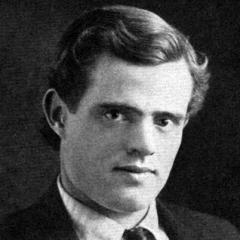
Jack London
Jack London

Jack London was an American author known for his adventure novels and realistic works. His writings often depicted the lives of the underclass and his profound insights into the natural world. His notable works include 'The Call of the Wild' and 'White Fang'. more

You May Also Like

“Journey to the Heart of Beauty; do not be obsessed with mental and egoic ideas of form and perfection. Get your hands and feet dirty, dance in the rain, and rejoice in the Life that is Living Itself through the Uniqueness of You!”

“The Heart-mantra of Dependent Origination (rten-'brel snying-po [རྟེན་འབྲེལ་སྙིང་པོ]), which liberates the enduring continuum of phenomena and induces the appearance of multiplying relics ('phel-gdung [འཕེལ་གདུང་] and rainbow lights, is: [OṂ] YE DHARMĀ HETUPRABHAVĀ HETUN TEṢĀṂ TATHĀGATO HY AVADAT TEṢĀṂ CA YO NIRODHO EVAṂ VĀDI MAHĀŚRAMAṆAḤ [YE SVĀHĀ] ('Whatever events arise from a cause, the Tathagāta [Buddha, "Thus-gone"] has told the cause thereof, and the great virtuous ascetic has taught their cessation as well [so be it]').”

“...if we seek the permanence of an object as something existing from its own side, we discover something inexpressible. If we take three sticks and place them together in a certain way, they will all stand up. If each of the sticks could stand under its own power, it would remain standing even if the others were removed, but they cannot. In this way we must understand dependent arising precisely. Another way of thinking about it is to consider clothing. Only when cloth is of the correct color, shape, and so forth is it labeled "clothing." Or think of a clock. Whenever we see a clock, we label it a clock, but if we were to separate the component pieces, then the "clock" would cease to exist, because no basis of imputation would remain. In actuality there was no truly existent clock in the first place—only the causes and conditions fit to be labeled a "clock.”

“The dependent origination, or structure of conditions, appears as a flexible formula with the intention of describing the ordinary human situation of a man in his world (or indeed any conscious event where ignorance and craving have not entirely ceased). That situation is always complex, since it is implicit that consciousness with no object, or being ( bhava— becoming, or however rendered) without consciousness (of it), is impossible except as an artificial abstraction. The dependent origination, being designed to portray the essentials of that situation in the limited dimensions of words and using only elements recognizable in experience, is not a logical proposition (Descartes’ cogito is not a logical proposition). Nor is it a temporal cause-and-effect chain: each member has to be examined as to its nature in order to determine what its relations to the others are (e.g. whether successive in time or conascent, positive or negative, etc., etc.). A purely cause-and-effect chain would not represent the pattern of a situation that is always complex, always subjective-objective, static-dynamic, positive-negative, and so on. Again, there is no evidence of any historical development in the various forms given within the limit of the Sutta Piþaka (leaving aside the Paþisambhidámagga), and historical treatment within that particular limit is likely to mislead, if it is hypothesis with no foundation. Parallels with European thought have been avoided in this translation. But perhaps an exception can be made here, with due caution, in the case of Descartes. The revolution in European thought started by his formula cogito ergo sum (“I think, therefore I am”) is not yet ended. Now, it will perhaps not escape notice that the two elements, “I think” and “I am,” in what is not a logical proposition parallel to some extent the two members of the dependent origination, consciousness and being (becoming). In other words, consciousness activated by craving and clinging as the dynamic factory, guided and blinkered by ignorance (“I think” or “consciousness with the conceit ‘I am’”), conditions being (“therefore I am”) in a complex relationship with other factors relating subject and object (not accounted for by Descartes). The parallel should not be pushed too far. In fact it is only introduced because in Europe the dependent origination seems to be very largely misunderstood with many strange interpretations placed upon it, and because the cogito does seem to offer some sort of reasonable approach.”

“Must be frustrating being a scientist. There you are, incrementally discovering how the universe works via a series of complex tests and experiments, for the benefit of all mankind - and what thanks do you get? People call you "egghead" or "boffin" or "heretic", and they cave your face in with a rock and bury you out in the wilderness. Not literally - not in this day and age - but you get the idea. Scientists are mistrusted by huge swathes of the general public, who see them as emotionless lab-coated meddlers-with-nature rather than, say, fellow human beings who've actually bothered getting off their arses to work this shit out.”

“To be is to be contingent: nothing of which it can be said that "it is" can be alone and independent. But being is a member of paticca-samuppada as arising which contains ignorance. Being is only invertible by ignorance. Destruction of ignorance destroys the illusion of being. When ignorance is no more, than consciousness no longer can attribute being (pahoti) at all. But that is not all for when consciousness is predicated of one who has no ignorance than it is no more indicatable (as it was indicated in M Sutta 22).”