Quotessence
Home / Quotes / Quote by Eknath Easwaran

Quote by Eknath Easwaran

“The law of karma says that no matter what context I find myself in, it is neither my parents, nor my science teacher, nor the mailman, but I alone who have brought myself into this state because of my past actions. Instead of trapping me in a fatalistic snare, this gives me freedom. Because I alone have brought myself into my present condition, I myself, by working hard and striving earnestly, can reach the supreme state which is nirvana.”

Quote by Eknath Easwaran

Work

The End of Sorrow

Browse quotes and source details for this work. more

Author

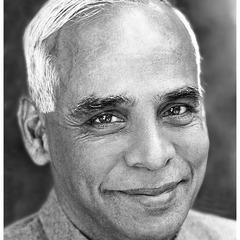
Eknath Easwaran
Eknath Easwaran

Eknath Easwaran was an Indian-American author known for his profound understanding of Eastern philosophy and spiritual life. His works blend the teachings of Hinduism, Buddhism, and Christianity, aiming to help readers achieve spiritual growth in their daily lives. Easwaran's works include 'The Power of Silence' and 'The Art of Living', which have a wide readership around the world. more

You May Also Like

“The only manner to blunt in a wholesome and righteous manner the emotional trauma of living under a death sentence is by making every day count, living passionately, and dedicating the journey stumbling through time to accomplishing a master life plan. We can assist each other find meaning in life and undertake a path that make every person’s life a worthy endeavor, but each person bears the personal responsibility for living their life, establishing who they are, and behaving in a manner that provides credence to their self-imposed ideology. If a person persists in shifting personal responsibility for their way of life onto someone else, they he or she fails to discover the meaning of his own existence.”

“We cannot replicate other people’s lives. We must each institute and broker a personalized meaning to our exclusive existence. We must each serve as our own Zen master, awaken to our inviolate personal truth, and strive to fulfill our sui generis (unique) nature.”

“A person seeks to quantify their existence. Do we measure a person’s life by its longevity or by assessing the warmth of its blaze? Do we measure a person by their brainpower or by the heartiness of his or her spine? Do earthy deeds count for more than intellectual opinions? What is more important, the work that a person produces or the quality of life that effuses from their being? Does it matter how we live and how we die, if we love or hate, are kind or mean, generous or stingy? Does it matter that we struggle to express personal doubts and toil in an effort to obtain redemption for our personal lapses?”

“Failure generates its own majesty. Defeat becomes a panoptic stain on the soul; it creates its own all-embracing pathos. Reverses engulf us in fleshy feelings of self-pity, sorrow, and apathy. Resounding setbacks might even be subtlety attractive because it means we can give up trying. It is tempting to accept defeat, surrender to our insecurities, and admit that because of failing to accomplish one particular goal that the best part of our life was wasted. Cynically writing ourselves off as a failure, we are free to capitulate to the emptiness of our lives.”

“All of us share conscious recognition of our individual self. Each of us is more than a product of our conscious thoughts. The dictation of our unconscious mind also affects our behavior. The unconsciousness cogitates upon problems that are too harsh to submit to conscious resolution. The unconscious mind frequently directs us to take action that a rational, conscious mind would eschew. Resembling a two-sided coin, both our conscious and unconscious minds contribute to our thought processes. Collaborative thoughts lead to action, and repeated actions result in the development of behavior patterns, and ingrained behavior patterns lead to a sense of identity.”