“But the greatest human problems are not social problems, but decisions that the individual has to make alone. The most important feelings of which man is capable emphasise his separateness from other people, not his kinship with them. The feelings of a mountaineer towards a mountain emphasise his kinship with the mountain rather than with the rest of mankind. The same goes for the leap of the heart experienced by a sailor when he smells the sea, or for the astronomer’s feeling about the stars, or for the archaeologist’s love of the past. My feeling of love for my fellowmen makes me aware of my humanness; but my feeling about a mountain gives me an oddly nonhuman sensation. It would be incorrect, perhaps, to call it ‘superhuman’; but it nevertheless gives me a sense of transcending my everyday humanity. Maslow’s importance is that he has placed these experiences of ‘transcendence’ at the centre of his psychology. He sees them as the compass by which man gains a sense of the magnetic north of his existence. They bring a glimpse of ‘the source of power, meaning and purpose’ inside himself. This can be seen with great clarity in the matter of the cure of alcoholics. Alcoholism arises from what I have called ‘generalised hypertension’, a feeling of strain or anxiety about practically everything. It might be described as a ‘passively negative’ attitude towards existence. The negativity prevents proper relaxation; there is a perpetual excess of adrenalin in the bloodstream. Alcohol may produce the necessary relaxation, switch off the anxiety, allow one to feel like a real human being instead of a bundle of over-tense nerves. Recurrence of the hypertension makes the alcoholic remedy a habit, but the disadvantages soon begin to outweigh the advantage: hangovers, headaches, fatigue, guilt, general inefficiency. And, above all, passivity. The alcoholics are given mescalin or LSD, and then peak experiences are induced by means of music or poetry or colours blending on a screen. They are suddenly gripped and shaken by a sense of meaning, of just how incredibly interesting life can be for the undefeated. They also become aware of the vicious circle involved in alcoholism: misery and passivity leading to a general running-down of the vital powers, and to the lower levels of perception that are the outcome of fatigue. ‘The spirit world shuts not its gates, Your heart is dead, your senses sleep,’ says the Earth Spirit to Faust. And the senses sleep when there is not enough energy to run them efficiently. On the other hand, when the level of will and determination is high, the senses wake up. (Maslow was not particularly literary, or he might have been amused to think that Faust is suffering from exactly the same problem as the girl in the chewing gum factory (described earlier), and that he had, incidentally, solved a problem that had troubled European culture for nearly two centuries). Peak experiences are a by-product of this higher energy-drive. The alcoholic drinks because he is seeking peak experiences; (the same, of course, goes for all addicts, whether of drugs or tobacco.) In fact, he is moving away from them, like a lost traveller walking away from the inn in which he hopes to spend the night. The moment he sees with clarity what he needs to do to regain the peak experience, he does an about-face and ceases to be an alcoholic.”
Quote by Colin Wilson
Work
New Pathways in Psychology: Maslow & the Post-Freudian Revolution
Browse quotes and source details for this work. more
Author
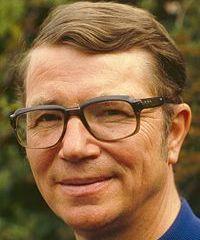
Colin Wilson
Colin Wilson, a British writer born on June 26, 1931, and died on December 5, 2013. His works spanned across various disciplines including philosophy, psychology, criminology, and literary criticism. He is known for his unique perspective and in-depth analysis. more
You May Also Like
Source: Strange Powers
Source: The Rise of Shams
Source: Fever A Novel
Source: Homo Roboticus: The Inner Human Robot Revealed By Sleepwalking and Hypnosis
“By bringing a soulful consciousness to gardening sacred space can be created outdoors.”
Source: Nature's Gifts Anthology
Source: Palace of Stone
Source: Palace of Stone
Source: The Forgotten Sisters
“Courage is not fearlessness.”
Source: The Forgotten Sisters