Quotessence
Home / Quotes / Quote by Ha-Joon Chang

Quote by Ha-Joon Chang

“Recognizing that the boundaries of the market are ambiguous and cannot be determined in an objective way lets us realize that economics is not a science like physics or chemistry, but a political exercise... If the boundaries of what you are studying cannot be scientifically determined, what you are doing is not a science.”

Quote by Ha-Joon Chang

Work

23 Things They Don't Tell You About Capitalism

This book delves into various aspects of capitalism, challenging widely held beliefs and offering a nuanced perspective on the economic system. more

Author
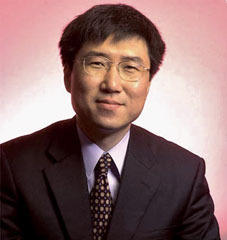
Ha-Joon Chang
Ha-Joon Chang

Ha-Joon Chang is a Korean-born economist known for his research on development economics and issues of globalization. His works, such as '23 Billion People's Challenge' and 'Kicking Away the Ladder', challenge traditional development theories and propose new models of development. more

You May Also Like

“To appreciate how income taxation reduces prosperity form what it could be, imagine a 100 percent tax on incomes. We wouldn't expect much prosperity in such a society. People would have no incentive to earn money. They would devote resources to hiding the little they did earn. No investments would be made. No savings would exist to increase living standards. People's activities would be grossly influenced by the tax. If we lower the rate from 100 percent, the principle does not change. . . If you want less of something, tax it.”

“Markets are voting machines; they function by taking referenda. In the new world money market, for example, currency values are now decided by a constant referendum of thousands of currency traders in hundreds of trading rooms around the globe, all connected to each other by a vast electronic network giving each trader instant access to information about any factor that might affect values. That constant referendum makes it much harder for central banks and governments to manipulate currency values.”

“So Eurodollars were in one sense dollars like any other, but in another sense they were different because they had escaped into a market outside government control, where they could behave freely. It’s a bit like taking someone from their family home in the suburbs to a wild part of town and offering them whisky and cocaine. They are the same person but also different – more fun but also more irresponsible.”

“They have not the slightest awareness of how restricted their idea of "universality" is and of how few they are thinking when they talk about "everybody" and "anybody". Their universalism is a fellowship of the elite - of the elite as formed by absolutism. There is hardly a rule or a requirement of classicistic aesthetics which is not based on the ideas of this absolutism. The desire is that art should have a unifor character, like the state, should produce the effect of formal perfection, like the movement of a corps, that it should be clear and precise, like a decree, and be governed by absolute rules, like the life of every subject in the state. The artist should be no more left to his own devices than any other citizen; he should rather be guided by the law, by regulations, so as not to go astray in the wilderness of his own imagination.”

“By exiling human judgment in the last few decades, modern law changed role from useful tool to brainless tyrant. This legal regime will never be up to the job, any more than the Soviet system of central planning was, because ti can't think. The comedy of law's sterile logic--large POISON signs warning against common sand, spending twenty-two years on pesticide review and deciding next to nothing, allowing fifty-year-old white men to sue for discrimination--is all too reminiscent of the old jokes we used to hear about life in the Eastern bloc. Judgement is to law as water is to crops. It should not be surprising that law has become brittle, and society along with it.”

“Most young people have rebellious, anti-authoritarian impulses. They don't like being told what, when, or how to do something. It's ironic, then, that many of these same people embrace a system in which there would be far more regulations, many more bureaucrats micromanaging their lives, and far more rules and restrictions on how things can be done.”