Quotessence
Home / Quotes / Quote by Ernest Hemingway

Quote by Ernest Hemingway

Work

For Whom the Bell Tolls

This classic novel delves into the intense experiences of a group of individuals during the tumultuous Spanish Civil War. The narrative follows Robert Jordan, an American dynamiter, as he navigates the complexities of love and the harsh realities of war. The story is rich with philosophical musings on the nature of life and death, making it a profound exploration of human existence. more

Author
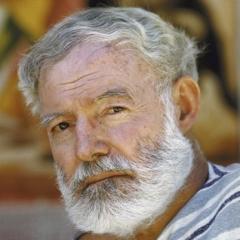
Ernest Hemingway
Ernest Hemingway

American author known for his concise and forceful writing style, as well as his profound insights into life. Hemingway's works cover a wide range of themes including war, adventure, and love, with notable titles such as 'The Old Man and the Sea' and 'A Farewell to Arms'. more

You May Also Like

“Although the discussions of quietism and nihilism conveyed by the Jesuits during the seventeenth and eighteenth centuries paved the way for Western characterizations of Buddhism, only during the nineteenth century was Buddhism definitively constituted as an obiect of discourse and "reified as a textual object" (Almond 1988, 139). This textualization permitted the emergence of the "historical" Buddha and the convenient opposition between a pure, canonical, early Buddhism and the degenerate Buddhist religion of contemporary Asia (Almond 1988, 25, 37-40).”

“Z[If any one says that the outward world is so constituted that one cannot resist it, let him study his own feelings and movements, and see whether there are not some plausible motives to account for his approval and assent, and the inclination of his reason to a particular object. To take an illustration, suppose a man to have made up his mind to exercise self-control and refrain from sexual intercourse, and then let a woman come upon the scene and solicit him to act contrary to his resolution; she is not cause sufficient to make him break his resolution. It is just because he likes the luxury and softness of the pleasure, and is unwilling to resist it, or stand firm in his determination, that he indulges in the licentious practice. On the contrary, the same thing may happen to a man of greater knowledge and better disciplined; he will not escape the sensations and incitements; but his reason, inasmuch as it is strengthened and nourished by exercise, and has firm convictions on the side of virtue, or is near to having them, stops the excitements short and gradually weakens the lust.”

“Sometimes I try to pray, late at night when I am unable to sleep, my bed hot from my body and me tossing and turning. It's hard not to pray in a rehearsed way, and I can feel myself perform a routine even in my most desperate moments: "Oh Lord, please help me do X or feel Y." So I try to sink back into myself, to a self that is unaware of church and religion, to a more primal self. I imagine God as the night sky, not a man or even a person, and then I try just to be me, to be real, to experience my humanity with God as a witness.”