Quotessence
Home / Quotes / Quote by Winston Graham

Quote by Winston Graham

“Demelza cominciò a cantare giocosa e con voce profonda: «C’era una vecchia coppia, senza un soldo in tasca, Tweedle, tweedle, go twee.»”

Quote by Winston Graham

Work

Ross Poldark

Browse quotes and source details for this work. more
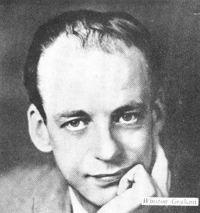
Author

Winston Graham
Winston Graham

Winston Graham, born on June 30, 1908, and died on July 10, 2003, was a British novelist. Known for his depictions of English rural life and historical events, his most famous work is the 'Poldark' series. more

You May Also Like

“They reached the summit of a shallow incline and were greeted with a surprising vista of bluebells that blanketed the forest floor. It was like stumbling into a dream, the cerulean haze seeping between the trunks of oak and beech and ash. The smell of bluebells was everywhere, the perfumed air feeling heavy and rich in her lungs. Pausing by a slender tree trunk, Annabelle curled her arm around it loosely and stared at the stands of bluebells with surprised pleasure. "Lovely," she murmured, her face gleaming in the shadow cast by the canopy of ancient, interlaced branches. "Yes." But Hunt was looking at her, not the bluebells, and one glance at his expression caused the blood to tingle in her veins.”

“As they strode through the meadow, she had the eerie sensation of walking atop waves. Except this was a sea of petals, not saltwater. Her toe caught on a fallen branch, and she stumbled a bit. "Are you all right?" Colin asked. She nodded. "I was just distracted. Wondering how much loam is in this soil." "What?" He set down his side of the trunk. Minerva did the same. "You know," she said. "Loam. A mix of clay and sand. In order for he soil to support this many bluebells, it would-" "You're standing in the middle of this," -he spread his arms wide to indicate Nature's splendor- " and you're thinking about loam in the soil? You spend far too much time staring at the ground." Rounding the trunk, Colin plucked her off her feet. With gentle strength, he tumbled her into the bluebells. She lay flat on her back, breathless and dizzy from the sudden inversion. From the sudden nearness of him. He lay down next to her. "There. Have a rest. Look up at the sky for a change." Minerva stared up from the uneven ground. Her heartbeat drummed in her ears, and a crushed green scent engulfed her senses. The grasses and bluebells towered over her, swaying in the gentle breeze and dripping loveliness. Above everything, the sky hovered brilliantly and blue. Nearly cloudless, save for a few wispy, changing puffs of white that were apparently too proud to mimic rabbits or dragons or sailing ships.”

“In our bedroom I chose curtains of bluebells, which was not really a good choice, because since this particular room faced north the sun seldom shone through. The only time they were pretty was when one lay in bed in mid-morning and saw the light shining through them, pulled back on either side of the window, or seen at night, the blue rather faded out. In fact, it was like bluebells in nature. As soon as you bring them into the house they turn grey and dispirited. and refuse to hold up their heads. A bluebell is a flower that refuses to b captured and is only gay when it is in the woods.”

“Dina looked up and found herself in a quiet glade, though that was the only thing her eyes could make sense of. Sunlight, much brighter than the tepid dawn, beat down through a circle of sky above her, a deep summer blue. Her skin prickled with an awareness that magic was at work here, though she wasn't sure if it was a witch's or the woodland itself. The entire glade was impossibly carpeted with bluebells. It was November, they shouldn't have been in bloom. But there they were, a dense meadow of bluish-purple flowers swaying in the breeze before her eyes. Impossible. Magical.”

“To preserve the benefits of what is called civilized life, and to remedy at the same time the evil which it has produced ,ought to be considered as one of the first objects of reformed legislation. Whether that state that is proudly, perhaps erroneously, called civilization, has most promoted or most injured the general happiness of man is a question that may be strongly contested. On one side, the spectator is dazzled by splendid appearances; on the other, he is shocked by extremes of wretchedness; both of which it has erected. The most affluent and the most miserable of the human race are to be found in the countries that are called civilized. To understand what the state of society ought to be, it is necessary to have some idea of the natural and primitive state of man; such as it is at this day among the Indians of North America. There is not, in that state, any of those spectacles of human misery which poverty and want present to our eyes in all the towns and streets in Europe. Poverty, therefore, is a thing created by that which is called civilized life. It exists not in the natural state. On the other hand, the natural state is without those advantages which flow from agriculture, arts, sciences and manufactures. -Agrarian Justice”

“Nothing more sharply reflects the inner contradictions in the emotional world of chivalry than its equivocal attitude to love, which combined the highest spiritualization with extreme sensuality. But illuminating as is a psychological analysis of the equivocal nature of these emotions, the psychological facts are a product of historical circumstances which in turn require explanation and can only be explained sociologically. The psychological mechanism of this attachment to the wife of another, and of this intensification of emotion through the freedom with which it could be expressed, could never have been set in motion without the force of ancient religious and social taboos having first been weakened and the soil prepared for such an exuberant growth of erotic feelings by the rise of a new emancipated upper class. In this case, too, psychology, as so often, is only unclear, disguised, incompletely worked-out sociology.”