Quotessence
Home / Quotes / Quote by Alice Walker

Quote by Alice Walker

Work

The Temple of My Familiar

This book delves into the complexities of personal identity and the dynamics of family relationships, offering a rich tapestry of characters and settings. more

Author
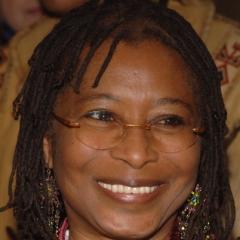
Alice Walker
Alice Walker

Alice Walker is a renowned American author born on February 9, 1944. Her works are known for their profound social criticism and feminist ideas, with notable titles including 'The Color Purple' and 'Beloved'. more

You May Also Like

“Where certainty ceases, thinking begins; the knower sets off into uncertainty. Both traditional ideas and their inverse had to be abandoned as supports. As the life of Katznelson shows, to achieve such freedom there has to be first the ability to allow oneself to be confused by intrusive reality along with diagnostic and intellectual courage.”

“I liken mothers who help raise their grandchildren as the empty pages and white spaces inside a book, the extra pages at the beginning and end of the books, the white space found at the end of chapters. Readers flip through these sections, unaware of the necessary roles these spaces play in the construction of the story itself, these vital, invisible parts that hold the story together. Most readers unconsciously disregard these blank spaces, choosing instead to focus on the story's visible drama and characters, unaware that empty pages and spaces serve to mold a story into a meaning retelling. White space in a book frames its story.”

“In the case of the Chicanx population, the US conquest and annexation of Mexican territory (a geographical area extending from Texas to California) following the Mexican American War (1846-1848) created a situation in which people of Mexican ancestry became subject to White domination...It was the general feeling among White settlers that they were superior to Mexicans...The question of how Mexicans should be classified racially was decided in 1897 by Texas courts, which ruled that Mexican Americans were not White. In California, they were classified as 'Caucasian' until 1930, when the state attorney general decided they should be categorized as 'Indians,' though 'not considered "the original American Indians of the US"'.”