Quotessence
Home / Quotes / Quote by Neil Gaiman

Quote by Neil Gaiman

“It occurred to me that the whole of art--maybe the whole of life--is just spray-painting your name on a wall, hoping that someone will see it after you've gone. And kids are to make sure that there's someone around who'll remember you when you're not around anymore.”

Quote by Neil Gaiman

Work

Death: The Time of Your Life

Browse quotes and source details for this work. more

Author
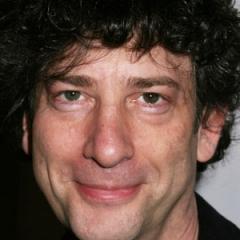
Neil Gaiman
Neil Gaiman

Neil Gaiman, born on November 10, 1960, is a renowned British author. His works span across various genres including fantasy, horror, and science fiction, with notable titles such as 'American Gods' and 'Good Omens'. Gaiman's writing style is distinctive and has won him a dedicated fan base. more

You May Also Like

“It was eerie how casually people donned the level of polish the Papers offered. Where others fawned over the results of Paper-made glamours, that level of calculated, pristine perfection made Sofi uncomfortable. Humans were messy and complex. It pained her that magic disguised that potential for failure with a fleeting sense of flawlessness.”

“Are you saying that truth, goodness, and beauty are to be found in books? But they are from God - aren't they to be found in the Mass? In the Eucharist? Yes, the Mass and the Eucharist are where God allows us to touch those transcendentals, indeed to touch and consume Himself, but in books - in music, in art, in the life well-lived - when we have an earnest desire to know and to love the human person, that is where we give those gifts back to God.”

“Making art provides uncomfortably accurate feedback about the gap that inevitably exists between what you intended to do, and what you did. In fact, if artmaking did not tell you (the maker) so enormously about yourself, then making art that matters to you would be impossible. To all viewers but yourself, what matter is the product: the experience of shaping that artwork. The viewers' concerns are not your concerns (although it's dangerously easy to adopt their attitudes.) Their job is whatever it is: to be moved by art, to be entertained by it, to make a killing off it, whatever. Your job is to learn to work on your work.”

“Even the separation of art from craft is largely a post-Renaissance concept, and more recent still is the notion that art transcends what you do, and represents what you are. In the past few centuries Western art has moved from unsigned tableaus of orthodox religious scenes to one-person displays of personal cosmologies. “Artist” has gradually become a form of identity which (as every artist knows) often carries with it as many drawbacks as benefits. Consider that if artist equals self, then when (inevitably) you make flawed art, you are a flawed person, and when (worse yet) you make no art, you are no person at all! It seems far healthier to sidestep that vicious spiral by accepting many paths to successful artmaking — from reclusive to flamboyant, intuitive to intellectual, folk art to fine art. One of those paths is yours. David Bayles. Art & Fear- Observations on the Perils (and Rewards) of Artmaking (pp. 12-13). (Function). Kindle Edition.”

“Even the separation of art from craft is largely a post-Renaissance concept, and more recent still is the notion that art transcends what you do, and represents what you are. In the past few centuries Western art has moved from unsigned tableaus of orthodox religious scenes to one-person displays of personal cosmologies. “Artist” has gradually become a form of identity which (as every artist knows) often carries with it as many drawbacks as benefits. Consider that if artist equals self, then when (inevitably) you make flawed art, you are a flawed person, and when (worse yet) you make no art, you are no person at all! It seems far healthier to sidestep that vicious spiral by accepting many paths to successful artmaking — from reclusive to flamboyant, intuitive to intellectual, folk art to fine art. One of those paths is yours.”