Quotessence
Home / Quotes / Quote by Robert Jordan

Quote by Robert Jordan

“It's good enough. It has to be, doesn't it? You see, lad, Aes Sedai are tricksome. They don't lie, not right out, but the truth an Aes Sedai tells you is not always the truth you think it is. You take care around her." "I've heard the stories," Rand retorted. "I'm not a child.”

Quote by Robert Jordan

Work

The Eye of the World

Browse quotes and source details for this work. more

Author

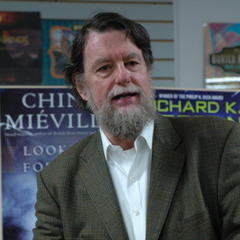
Robert Jordan
Robert Jordan

Robert Jordan was an American author best known for his epic fantasy novel series, 'The Wheel of Time'. His works are celebrated for their complex characters, richly developed worlds, and profound philosophical themes. more

You May Also Like

“So much of the story we tell about history is really the story that we tell about ourselves, about our mothers and our fathers and their mothers and their fathers, as far back as our lineages will take us. Throughout our lives we are told certain stories and they are stories that we choose to believe--stories that become embedded in our identities in ways we are not always fully cognizant of. For many of the people I met at Blandford, the story of the Confederacy is the story of their home, of their family--and the story of their family is the story of them. So when they are asked to reckon with the fact that their ancestors fought a war to keep my ancestors enslaved, there is resistance to facts that have been documented by primary sources and contemporaneous evidence. They are forced to confront the lies they have upheld. They are forced to confront the flaws of their ancestors. As Greg Stewart, a member of the Sons of Confederate Veterans, told the New York Times in the aftermath of the 2015 Charleston massacre, "You're asking me to agree that my great-grandparents and great-great-grandparents were monsters." Accepting such a reality would, for them, mean the deterioration of a narrative that has long been a part of their lineage, and the disintegration of so much of who they believed themselves to be in the world. But as I think of Blandford, I'm left wondering if we are all just patchworks of the stories we've been told. What would it take--what does it take--for you to confront a false history even if it means shattering the stories you have been told throughout your life? Even if it means having to fundamentally reexamine who you are and who your family has been? Just because something is difficult to accept doesn't mean you should refuse to accept it. Just because someone tells you a story doesn't make that story true.”