Quotessence
Home / Quotes / Quote by Joseph Roth

Quote by Joseph Roth

Work

What I Saw: Reports from Berlin 1920-1933

This book offers a firsthand account of the political, social, and cultural transformations in Berlin between 1920 and 1933, capturing the essence of the Weimar Republic's tumultuous period. more

Author
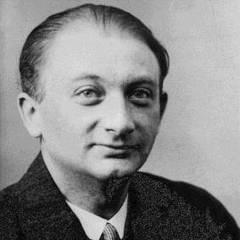
Joseph Roth
Joseph Roth

Joseph Roth, born on September 2, 1894, in the Austro-Hungarian Empire, was a renowned journalist and writer in the 20th century. Known for his profound insights into European society and politics, Roth's work has left a lasting impact on literature. more

You May Also Like

“I will gather up a lifetime of things unsaid, write them down, and then offer them all to be lit up for security and burned. All at once. And then I can watch the whole thing turn to ash. The whole damn thing. Light the match, and watch it burn. What a loaded bonfire that would be though, if this gets burned when I finish filling up the whole book. What a cleansing experience that will be! If flames could speak, what a story they would tell. They say that the original bonfires were the burning up of bones. Bad bones. Bad people. Enemies. Turning bones to ash. And it was the burning up of curses and all things bad as well. God knows we have had and still have enemies, and even curses. Real ones.”

“Plato and Aristotle were comfortable in a slave society. They offered justification for oppression. They served tyrants. They taught the alienation of the body from the mind (a natural enough ideal in a slave society); they separated matter from thought; they divorced the Earth from the heavens - divisions that were to dominate Western thinking for more than twenty centuries. Plato, who believed that 'all things are full of gods,' actually used the metaphor of slavery to connect his politics with his cosmology. He is said to have urged the burning of all of the books of Democritus (he had a similar recommendation for the books of Homer), perhaps because Democritus did not acknowledge immortal souls or immortal gods or Pythagorean mysticism, or because he believed in an infinite number of worlds. Of the seventy-three books Democritus is said to have written, covering all of human knowledge, not a single work survives. All we know is from fragments, chiefly on ethics, and secondhand accounts. The same is true of almost all the other ancient Ionian scientists.”