“It had not rained, here on these north-facing slopes. Snow-fields stretched down from the pass into the valleys of moraine. We stowed the wheels, uncapped the sledge-runners, put on our skis, and took off—down, north, onward, into that silent vastness of fire and ice that said in enormous letters of black and white DEATH, DEATH, written right across a continent. The sledge pulled like a feather, and we laughed with joy.”
Quote by Ursula K. Le Guin
Work
The Left Hand of Darkness
Ursula K. Le Guin's novel is set in a distant future where human-like beings called the Ekumen live on various planets. The story follows a male human envoy, Genly Ai, who travels to the planet Gethen to win its inclusion in the Ekumen. The inhabitants of Gethen are ambisexual, capable of changing their gender, which adds a unique perspective to the narrative and raises questions about gender identity and human nature. more
Author
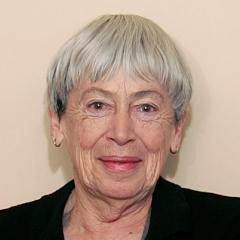
Ursula K. Le Guin
Ursula K. Le Guin, born on October 21, 1929, is an esteemed American author of science fiction and fantasy. Known for her profound philosophical insights, rich imagination, and unique narrative style, Le Guin's works have won numerous literary awards and have had a significant impact on science fiction and fantasy literature. Her most famous works include the 'Earthsea' series and 'The Left Hand of Darkness', which have won her awards such as the Nebula and Hugo Awards, and she has also received the National Book Award for lifetime achievement for her contributions to literature. more
You May Also Like
“One cannot expect to travel far without faith.”
Source: Fire & Ice: The Elementals
“To vanquish the beast, one must not be afraid to awaken it.”
Source: Fire & Ice: The Ember Sword
“Time has healed the wound, but a scar will always remain. There is no shame in the vulnerable.”
Source: Fire & Ice: The Kindred Woods
“Do not be ashamed of fear. Rather, fear the inability to overcome it.”
Source: Fire & Ice: The Kindred Woods
Source: The Witches of Cambridge
“Perception, influenced by experience and knowledge creates an acceptable level of reality.”
Source: The Initiates
Source: Love and will