“Every fundamentalism focuses on end times, and Armageddon is, in a sense, a rhetorical trope, an emphatic and overwhelming conclusion, meant to wrap up and make tidy the mistaken wanderings of history. For a fundamentalist the end is one of the forms desire takes, a passion no different from lust or avarice, intense with longing and the need for fulfillment and relief. It’s like they’re horny for apocalypse. They get off on denouements, which partly explains why Hell House never amounted to much more than a series of murderous conclusions. It focused only on that part of a story where life finds itself fated. Inside every act a judgement was coiled. Real people with their ragged and uncertain lives, their stumbling desires, their bleak or blessed futures, would only break into the narrative, complicating the story, dragging it on endlessly.”
Quote by Charles D'Ambrosio
Work
Loitering: New & Collected Essays
Browse quotes and source details for this work. more
Author
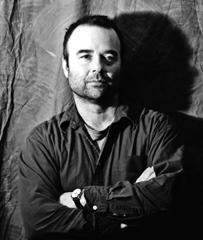
Charles D'Ambrosio
Charles D'Ambrosio is an American short story writer known for his concise and profound writing style. His works often explore themes of human relationships, moral dilemmas, and the essence of human existence. Born in 1958, D'Ambrosio's short stories have gained widespread recognition in the literary world. more
You May Also Like
“Each one desires to be a flower, but none wants to be a leaf.”
“Perhaps, it would be wise to flow with time; like a leaf carried by the stream of water.”
Source: Shape Your Path at IE University : What to expect from Spain’s Instituto de Empresa University
Source: Slow: Simple Living for a Frantic World