Quotessence
Home / Quotes / Quote by Maya Angelou

Quote by Maya Angelou

“After that exercise, the ship of my life might or might not be sailing on calm seas. The challenging days of my existence might or might not be bright and promising. From that encounter on, whether my days are stormy or sunny and if my nights are glorious or lonely, I maintain an attitude of gratitude. If pessimism insists on occupying my thoughts, I remember there is always tomorrow. Today I am blessed.”

Quote by Maya Angelou

Work

Mom & Me & Mom

This book delves into the emotional tapestry of a mother-daughter bond, capturing the love, challenges, and growth that define their connection throughout the years. more

Author

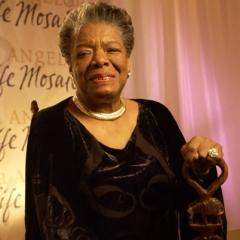
Maya Angelou
Maya Angelou

Maya Angelou was an American author, poet, playwright, actress, and lecturer, known for her profound exploration of race, gender, and culture in her work. Her autobiographical works, including 'I Know Why the Caged Bird Sings,' which detailed her early life of poverty and sexual exploitation, have gained widespread acclaim. more

You May Also Like

“All things multiply themselves. Worry multiplies reasons to worry. Fear multiplies things to be fearful of. Hate multiplies feelings of hate. Gratitude multiplies things to grateful for. Faith multiplies proof of faithfulness. Love multiplies circumstances that facilitate love.”

“This scholarly shortfall did not happen by chance. Part of it has to do with particular discomforts characteristics of left-leaning academic social scientists. Conducting high-quality ethnographic or long-term participant observation research can require a great deal of empathy for one’s subjects. Such research involves more or less taking on the perspective of the people and culture being studied. It means listening to their stories with honesty and, if only for a moment, giving their experiences and their explanations the benefit of the doubt. But most social scientists know the facts about inequality, wealth, and privilege, and thus find the empathy required for ethnographic research in short supply when it comes to the ultra-wealthy. Empathy is more naturally given to the people and communities obviously suffering harm, rather than, say, a Wall Street financier who struggles with the life complexities and social-psychological dilemmas that accompany immense wealth and power.”