Quotessence
Home / Quotes / Quote by Mahatma Gandhi

Quote by Mahatma Gandhi

“An error does not become truth by reason of multiplied propagation, nor does the truth become error because nobody will see it. (Young India 1924-1926)”

Quote by Mahatma Gandhi

Author
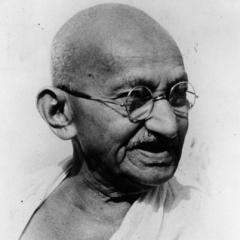
Mahatma Gandhi
Mahatma Gandhi

A leader of the Indian independence movement, lawyer, politician, and social activist, Mahatma Gandhi is revered as the 'Father of the Nation'. He advocated for non-violence and unity between Hindus and Muslims, leading the Indian struggle for independence and profoundly influencing history both in India and around the world. more

You May Also Like

“The rage Jacob experienced was something new. He'd known fear and adrenaline in battle, but this was sheer unadulterated hatred. This was not the soldier who'd had killed Renee's family, but he was one of them. And he would do. Just a moment before Jacob had been lost in despair. Yet as his misery morphed into anger he felt better because now he had purpose and the purpose was vengeance. This enemy was going to pay for madam and the children and for Freddy and Leeland and all the others, too. He stared down the rifle barrel and saw... himself. Not Jacob Firestone, but pale blue eyes that reminded him very much of the teenage boy he faced in the mirror every day. In another life they could have been 12th-graders together swapping chemistry notes and talking about girls. He felt his finger loosening on the trigger. No, he exhorted himself. You walked away from an enemy in this orchard once before and look what happened. You can't let this one go. But when Jacob sighted down at the boy he beheld no menace. Only terror. There had been so much death and suffering already. What could possibly be gained by killing this poor, scared kid in the aftermath of a battle that was already over? Jacob lowered his rifle. "Get out of here, High School. Beat it!" And when the stunned boy scrambled up, gawked at him in disbelief and ran off, Jacob felt reborn.”

“Sidenote on crying: there’s a procedure for that, too. More specifically, the procedure involves what to do about tissues. I teach my students crying is an effective way to express and release emotion. When patients and family members are vulnerable enough to cry in front of us, they give us a beautiful gift. Handing someone a box of tissues as soon as the tears start falling might feel helpful, but it can also send the message, “You’re making me uncomfortable. Please stop crying.” If I immediately shove a tissue box in someone’s face, the tears often stop. I’ve interrupted the flow of emotion. Instead, I just locate the tissue box in the room with my eyes. I don’t push it away like some sadist if the patient reaches for it; but until they do, or until they let out a sigh and start looking around the room for the box, I just let them talk and cry. Let the tears soak their hands, their sleeves, their blankets, whatever is available—let it all pour out! When they’re ready, their body language will let me know. Then I’ll hand them the tissues.”