Quotessence
Home / Quotes / Quote by Elizabeth Strout

Quote by Elizabeth Strout

“Leaning against his desk, Bob thought then of Little Annie, the plant that Lucy had. How Lucy was afraid that the plant had died, but it had not. Every leaf had fallen off, but then it broke through, a tiny little new green leaf at the top of it. What a thing this life force was, Bob thought”

Quote by Elizabeth Strout

Author
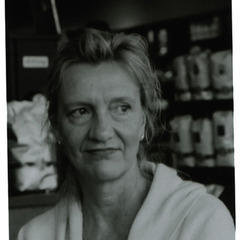
Elizabeth Strout
Elizabeth Strout

Elizabeth Strout (born January 6, 1956) is an acclaimed American author known for her nuanced portrayals of small-town life and human complexity. Born in Portland, Maine, she grew up in a literary family. Strout won the Pulitzer Prize for Fiction in 2009 for her novel 'Olive Kitteridge,' which was adapted into an award-winning HBO miniseries. Her other notable works include 'Amy and Isabelle,' 'The Burgess Boys,' and 'Anything Is Possible.' Strout's writing often explores themes of loneliness, family, love, and loss through the lives of ordinary people. She is praised for her concise yet powerful prose and deep psychological insight. Her works have been translated into multiple languages and have a global readership. more

You May Also Like

“Öğrenci: Usta, bugün attığım okların hepsi hedefi vurdu! Artık ben bir ok ustasıyım! Usta: Usta vardır ve bir de ustaların üstünde bir usta vardır! Şimdi git, aynı hedefi zıplarken vurmaya çalış, hava rüzgârlıyken, hedef kaçarken, gözün tamamen bağlıyken, amuda kalkmışken, arkanda bir köpek seni ısırmaya çalışırken vurmaya çalış, sonra gel yine konuşalım!”

“Truth be told, the reality show itself quickly degenerated into a televisual soap opera that was not that different than old variety shows made for large audiences. And its audience was amplified at the usual rate of competing media, which leads to the self- propagation of the show via a prophetic method: self-fulfilling prophecy. In the end, the ratings for the show play part of the spiral and return cycle of the advertising flame. But all of this is of little interest. It is only the original idea which has any value: submitting a group to a sensory deprivation experiment ( Which in other times was a form of calculated torture. But are we not in the middle of exploring all the historical forms of torture, served in homeopathic doses, under the guise of mass culture or avant-garde art? This is precisely one of the principle themes of contemporary art.), in order to record the behavior of human molecules within a vacuum - and no doubt with the design of watching them tear each other apart in the artificial promiscuity. We have not yet reached this point, but this existential micro-situation functions as a universal metaphor for the modern being, holed up in his personal loft, which is no longer his physical or mental universe. It is his digital and tactile universe, of Turing’s “spectral body”, of the digital man, captured within the labyrinth of the networks, of man turned into his own (white) mouse.”

“The Polite Wassermann. Margaret Trabert lay on the blood-shot candlewick of the bedspread, unsure whether to dress now that Trabert had taken the torn flying jacket from his wardrobe. All day he had been listening to the news bulletins on the pirate stations, his eyes hidden behind the dark glasses as if deliberately concealing himself from the white walls of the apartment and its unsettled dimensions. He stood by the window with his back to her, playing with the photographs of the isolation volunteers. He looked down at her naked body, with its unique geometry of touch and feeling, as exposed now as the faces of the test subjects, codes of insoluble nightmares. The sense of her body’s failure, like the incinerated musculatures of the three astronauts whose after-deaths were now being transmitted from Cape Kennedy, had dominated their last week together. He pointed to the pallid face of a young man whose photograph he had pinned above the bed like the icon of some algebraic magus. ‘Kline, Coma, Xero - there was a fourth pilot on board the capsule. You’ve caught him in your womb.”