Quotessence
Home / Quotes / Quote by David Levithan

Quote by David Levithan

“candid, adj. "Most times, when I'm having sex, I'd rather be reading." This was, I admit, a strange thing to say on a second date. I guess I was just giving you a warning. "Most times when I'm reading," you said, "I'd rather be having sex".”

Quote by David Levithan

Work

The Lover's Dictionary

Browse quotes and source details for this work. more

Author
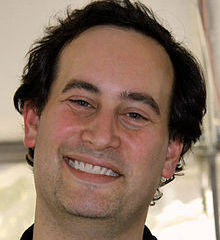
David Levithan
David Levithan

David Levithan, born on September 7, 1972, is a renowned author from the United States. His works span across various genres including young adult literature, adult fiction, and non-fiction, known for his unique narrative style and profound insights into social issues. more

You May Also Like

“The more I read, the more I was led to abhor and detest my enslavers. I could regard them in no other light than a band of successful robbers, who had left their homes, and gone to Africa, and stolen us from our homes, and in a strange land reduced us to slavery. I loathed them as being the meanest as well as the most wicked of men. As I read and contemplated the subject, behold! that very discontentment which Master Hugh had predicted would follow my learning to read had already come, to torment and sting my soul to unutterable anguish. As I writhed under it, I would at times feel that learning to read had been a curse rather than a blessing. It had given me a view of my wretched condition, without the remedy. it opened my eyes to the horrible pit, but to no ladder upon which to get out. in moments of agony, I envied my fellow-slaves for their stupidity. I have often wished myself a beast. I preferred the condition of the meanest reptile to my own. Any thing, no matter what, to get rid of thinking! It was this everlasting thinking of my condition that tormented me. There was no getting rid of it. It was pressed upon me by every object within sight or hearing, animate or inanimate. The silver trump of freedom had roused my soul to eternal wakefulness. Freedom now appeared, to disappear no more forever. It was heard in every sound and seen in every thing. It was ever present to torment me with a sense of my wretched condition. I saw nothing without seeing it, I heard nothing without hearing it, and felt nothing without feeling it. It looked from every star, it smiled in every calm, breathed in every wind, and moved in every storm.”

“It wasn’t just a coincidence — it was all meant to happen. I walked hundreds of miles, wandered through streets and alleyways, drifting along strange paths with no sense of direction. I searched for you in every passing face, certain you were among them. Until I saw that look drawn across your forehead… and only then, did I realize — you were never the one I was searching for.”

“I, too, feel the need to reread the books I have already read," a third reader says, "but at every rereading I seem to be reading a new book, for the first time. Is it I who keep changing and seeing new things of which I was not previously aware? Or is reading a construction that assumes form, assembling a great number of variables, and therefore something that cannot be repeated twice according to the same pattern? Every time I seek to relive the emotion of a previous reading, I experience different and unexpected impressions, and do not find again those of before. At certain moments it seems to me that between one reading and the next there is a progression: in the sense, for example, of penetrating further into the spirit of the text, or of increasing my critical detachment. At other moments, on the contrary, I seem to retain the memory of the readings of a single book one next to another, enthusiastic or cold or hostile, scattered in time without a perspective, without a thread that ties them together. The conclusion I have reached is that reading is an operation without object; or that its true object is itself. The book is an accessory aid, or even a pretext.”