Quotessence
Home / Quotes / Quote by George Orwell

Quote by George Orwell

Work

The Road to Wigan Pier

Published in 1937, the book is a blend of personal reflections and detailed observations of the author's journey through the industrial town of Wigan, shedding light on the hardships faced by the working poor during the interwar period. more

Author
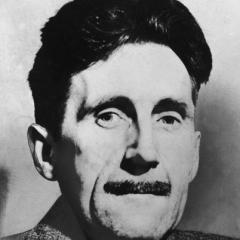
George Orwell
George Orwell

George Orwell, born Eric Arthur Blair, was a British novelist and political critic. Known for his sharp social criticism and profound insights into totalitarianism, Orwell is best remembered for his novels '1984' and 'Animal Farm', which remain influential to this day. more

You May Also Like

“Modesty has moved from the organ of ambition. Modesty has settled upon the organ of conviction where it was never meant to be. A man was meant to be doubtful about himself, but undoubting about the truth: this has been exactly reversed. Nowadays the part of a man that a man does assert is exactly the part he ought not to assert — himself. The part he doubts is exactly the part he ought not to doubt — the Divine Reason”

“I have heard that in some debating clubs there is a rule that the members may discuss anything except religion and politics. I cannot imagine what they do discuss; but it is quite evident that they have ruled out the only two subjects which are either important or amusing. The thing is a part of a certain modern tendency to avoid things because they lead to warmth; whereas, obvious]y, we ought, even in a social sense, to seek those things specially. The warmth of the discussion is as much a part of hospitality as the warmth of the fire.”

“But Voltaire, even at his best, really began that modern mood that has blighted all the humanitarianism he honestly supported. He started the horrible habit of helping human beings only through pitying them, and never through respecting them. Through him the oppression of the poor became a sort of cruelty to animals, and the loss of all that mystical sense that to wrong the image of God is to insult the ambassador of a King.”

“A man making the confession of any creed worth ten minutes’ intelligent talk is always a man who gains something and gives up something. So long as he does both he can create; for he is making an outline and a shape. Mahomet created, when he forbade wine but allowed five wives: he created a very big thing, which we have still to deal with. The first French Republic created, when it affirmed property and abolished peerages; France still stands like a square, four-sided building which Europe has besieged in vain. The men of the Oxford Movement would have been horrified at being compared either with Moslems or Jacobins. But their subconscious thirst was for something that Moslems and Jacobins had and ordinary Angelicans had not: the exalted excitement of consistency. If you were a Moslem you were not a Bacchanal. If you were a Republican you were not a peer. And so the Oxford men, even in their first and dimmest stages, felt that if you were a Churchman you were not a Dissenter. [...] It was an appeal to reason: reason said that if a Christian had a feast-day he must have a fast-day too. Otherwise, all days out to be alike; and this was the very Utilitarianism against which their Oxford Movement was the first and most rational assault.”