Quotessence
Home / Quotes / Quote by John Steinbeck

Quote by John Steinbeck

“Kino escuchó el leve romper de las olas de la mañana en la playa. Era estupendo...Kino volvió a cerrar los ojos y atendió a su música interior. Quiza sólo él hiciera eso, y quizá lo hiciera toda su gente. Los suyos habían sido una vez grandes creadores de canciones, hasta el punto de que todo lo que veían o pensaban o hacían u oían, se convertía en canción...”

Quote by John Steinbeck

Work

The Pearl

This novella, set in the Mexican gulf coast, follows the story of a poor fisherman who discovers a magnificent pearl. The discovery brings him wealth and ambition, but also leads to tragedy and moral dilemmas. The story delves into the corrupting influence of sudden wealth and the consequences of human desires. more

Author

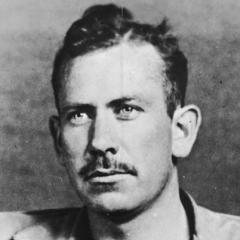
John Steinbeck
John Steinbeck

John Steinbeck was an American author renowned for his profound depiction of American society and the lives of farmers. His works often explore themes of poverty, social injustice, and human nature. Steinbeck was awarded the Nobel Prize in Literature in 1962 for his significant contribution to American literature. more

You May Also Like

“Hate cannot live alone. It It must have love as a trigger, a goad, or a stimulant. Joe early developed a gentle protective love for Joe. He comforted and flattered and cherished Joe. He set up walls to save Joe from a hostile world. And Joe gradually became proof against wrong. If Joe got into trouble, it was because the world was in angry conspiracy against him. And if Joe attacked the world, it was revenge and they damn well deserved it - the sons of bitches. Joe lavished every care on his love, and he perfected a lonely set of rules which might have gone like this: 1. Don't believe nobody. The bastards are after you. 2. Keep your mouth shut. Don't keep your neck out. 3. Keep your ears open. When they make a slip, grab on to it and wait. 4. Everybody's a son of a bitch and whatever you do they got it coming.”

“Not long ago, after my last trip to Russia, I had a conversation with an American very eminent in the field of politics. I asked what he read, and he replied that he studied history, sociology, politics and law. "How about fiction - novels, plays poetry?" I asked. "No," he said, "I have never had time for them. There's so much else I have to read." I said, "Sir, I have recently visited Russia for the third time and don't know how well I understand Russians; but I do know that if I only read Russian history I could not have had the access to Russian thinking I have had from reading Dostoevsky, Tolstoy, Chekhov, Pushkin, Turgenev, Sholokhov, and Ehrenburg. History only recounts, with some inaccuracy, what they did. The fiction tells, or tries to tell, why they did it and what they felt and were like when they did it." My friend nodded gravely. "I hadn't though of that," he said. "Yes, that might be so; I had always thought of fiction as opposed to fact." But in considering the American past, how poor we would be in information without Huckleberry Fin, An American Tragedy, Winesburg, Ohio, Main Street, The Great Gatsby, and As I Lay Dying.”