“Her mother, an unshapely, chubby-cheeked creature from the rural gentry of Styria, permanently lost her hair at the age of forty after being treated for influenza by her husband, and prematurely withdrew from society. She and her husband were able to live in the Gentzgasse thanks to her mother's fortune, which derived from the family estates in Styria and then devolved upon her. She provided for everything, since her husband earned nothing as a doctor. He was a socialite, what is known as a beau, who went to all the big Viennese balls during the carnival season and throughout his life was able to conceal his stupidity behind a pleasingly slim exterior. Throughout her life Auersberger's mother-in-law had a raw deal from her husband, but was content to accept her modest social station, not that of a member of the nobility, but one that was thoroughly petit bourgeois. Her son-in-law, as I suddenly recalled, sitting in the wing chair, made a point of hiding her wig from time to time--whenever the mood took him--both in the Gentzgasse and at the Maria Zaal in Styria, so that the poor woman was unable to leave the house. It used to amuse him, after he had hidden her wig, to drive his mother-in-law up the wall, as they say. Even when he was going on forty he used to hide her wigs--by that time she has provided herself with several--which was a symptom of his sickness and infantility. I often witnessed this game of hide-and-seek at Maria Zaal and in the Gentzgasse, and I honestly have to say that I was amused by it and did not feel in the least bit ashamed of myself. His mother-in-law would be forced to stay at home because her son-in-law had hidden her wigs, and this was especially likely to happen on public holidays. In the end he would throw the wig in her face. He needed his mother-in-law's humiliation, I reflected, sitting in the wing chair and observing him in the background of the music room, just as he needed the triumph that this diabolical behavior brought him.”
Quote by Thomas Bernhard
Book:Woodcutters
Work
Woodcutters
In this narrative, the reader is immersed in the life of a logging family, their daily struggles, and the intricate relationships within the community. The story delves into the cultural and historical context of woodcutting, highlighting the connection between the people and the land they work on. The novel is a contemplation on the passage of time, the changing seasons, and the enduring legacy of a way of life. more
Author
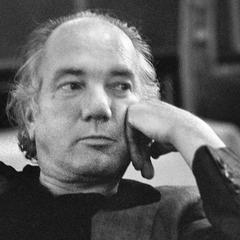
Thomas Bernhard
Thomas Bernhard, born on February 9, 1931 and died on February 12, 1989, was an influential Austrian novelist. His works are renowned for their unique style and profound criticism of social reality. more
You May Also Like
Source: Heart of Darkness
Source: the big sleep
Source: Otpovijed 2
“Don't believe in everything that is written. Not everything that is written is true”
Source: Pearls Of Eternity
Source: The Uncharted Mind
Source: Chimera
Source: Narcissus in Chains
Source: Fire Clothed in Skin