Quotessence
Home / Quotes / Quote by Andy Warhol

Quote by Andy Warhol

“I´ve often wondered why people who could look at incredible new art and laugh at it bothered to involve themselves with art at all. And yet you'd run into so many of these types around the art scene.”

Quote by Andy Warhol

Work

POPism: The Warhol Sixties

This book delves into the transformative era of the 1960s, analyzing the influence of Andy Warhol and the Pop Art movement on American culture. It explores the intersection of art, media, and consumerism during this pivotal time in history. more

Author
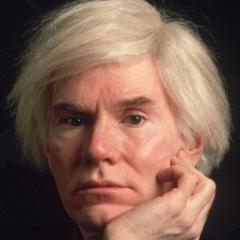
Andy Warhol
Andy Warhol

Andy Warhol was a leading figure in the Pop Art movement, known for his distinctive screen printing and repetition of images. Born on August 6, 1928, and passing away on February 22, 1987, Warhol's work spanned various fields including painting, photography, film, music, and commercial design, profoundly impacting the art and culture of the 20th century. more

You May Also Like

“Not every change is so subtle. There are chefs in Rome taking the same types of risks other young cooks around the world are using to bend the boundaries of the dining world. At Metamorfosi, among the gilded streets of Parioli, the Columbian-born chef Roy Caceres and his crew turn ink-stained bodies into ravioli skins and sous-vide egg and cheese foam into new-age carbonara and apply the tools of the modernist kitchen to create a broad and abstract interpretation of Italian cuisine. Alba Esteve Ruiz trained at El Celler de Can Roca in Spain, one of the world's most inventive restaurants, before, in 2013, opening Marzapane Roma, where frisky diners line up for a taste of prawn tartare with smoked eggplant cream and linguine cooked in chamomile tea spotted with microdrops of lemon gelée.”

“Noa sleeps with the curtains open, allowing as much moonlight as possible to flood her bedroom, allowing her to see each and every picture on the walls, if only as a pale glimmer. It took Noa weeks to perfect the art display. Reproductions of Monet's gardens at Giverny blanket one wall: thousands of violets- smudges of purples and mauves- and azaleas, poppies, and peonies, tulips and roses, water lilies in pastel pinks floating on serene lakes reflecting weeping willows and shimmers of sunshine. Turner's sunsets adorn another: bright eyes of gold at the center of skies and seas of searing magenta or soft blue. The third wall is splashed with Jackson Pollocks: a hundred different colors streaked and splattered above Noa's bed. The fourth wall is decorated by Rothko: blocks of blue and red and yellow blending and bleeding together. The ceiling is papered with the abstract shapes of Kandinsky: triangles, circles, and lines tumbling over one another in energetic acrobatics.”

“But in my profession I know one miraculous name. You will be very much surprised. This name is Piet Mondrian. That man painted extremely simple panels, where on a seemingly white ground, divided by what seems to merely be black lines of different sizes and some rectangles of color. If you sit in front of that picture or in front of any of his pictures, but you cannot see it quick, you see it certain times. You have to conentrate and suddenly in front of your eyes, the background recedes, the airy, wonderful structure is advancing towards your eyes and you see the green going far and red coming nearer and the yellow going out of sight. And in front of your eyes is the structure. You are assisting at something that becomes in front of your eyes, that's veritably a becoming, you are assisting at the birth of a form. It is miraculous to recreate the form, but to make you see form being born in front of you -- it is a great miracle. [-- Martin A. Ryerson Lecture, 20 February 1951]”

“But in my profession I know one miraculous name. You will be very much surprised. This name is Piet Mondrian. That man painted extremely simple panels, where on a seemingly white ground, divided by what seems to merely be black lines of different sizes and some rectangles of color. If you sit in front of that picture or in front of any of his pictures, but you cannot see it quick, you see it certain times. You have to concentrate and suddenly in front of your eyes, the background recedes, the airy, wonderful structure is advancing towards your eyes and you see the green going far and red coming nearer and the yellow going out of sight. And in front of your eyes is the structure. You are assisting at something that becomes in front of your eyes, that's veritably a becoming, you are assisting at the birth of a form. It is miraculous to recreate the form, but to make you see form being born in front of you -- it is a great miracle. [-- Martin A. Ryerson Lecture, 20 February 1951]”