Quotessence
Home / Quotes / Quote by Ali Smith

Quote by Ali Smith

“I wished that my own bones were unbound, I wished they were mingling, picked clean by fish, with the bones of another body, a body my bones and heart and soul had loved with unfathomable certainty for decades, and both of us down deep now, lost to everything but the fact of bare bones on a dark seabed.”

Quote by Ali Smith

Work

Girl Meets Boy

This novel follows the journey of two teenagers as they navigate the complexities of their first love. The story delves into the emotional and physical changes that come with adolescence, as well as the societal expectations and personal desires that shape their experiences. more

Author

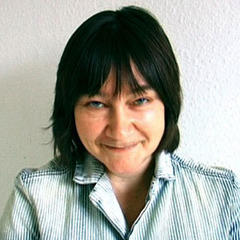
Ali Smith
Ali Smith

Ali Smith, born in 1962, is a renowned British writer. Her works are known for their unique style and profound themes, covering various genres such as novels, essays, and plays. Smith's writing often explores the relationship between individuals and society, as well as the intertwining of history and reality. more

You May Also Like

“If we think deeply about our childhood, not just about our memories of it but how it actually felt, we realize how differently we experienced the world back then. Our minds were completely open, and we entertained all kinds of surprising, original ideas. Things that we now take for granted, things as simple as the night sky or our reflection in a mirror, often caused us to wonder. Our heads teemed with questions about the world around us. Not yet having commanded language, we thought in ways that were preverbal—in images and sensations. When we attended the circus, a sporting event, or a movie, our eyes and ears took in the spectacle with utmost intensity. Colors seemed more vibrant and alive. We had a powerful desire to turn everything around us into a game, to play with circumstances. Let us call this quality the Original Mind. This mind looked at the world more directly—not through words and received ideas. It was flexible and receptive to new information. [...] Masters and those who display a high level of creative energy are simply people who manage to retain a sizeable portion of their childhood spirit despite the pressures and demands of adulthood. This spirit manifests itself in their work and in their ways of thinking. Children are naturally creative. They actively transform everything around them, play with ideas and circumstances, and surprise us with the novel things they say or do. [...] Masters not only retain the spirit of the Original Mind, but they add to it their years of apprenticeship and an ability to focus deeply on problems or ideas. This leads to high-level creativity. Although they have profound knowledge of a subject, their minds remain open to alternative ways of seeing and approaching problems. They are able to ask the kinds of simple questions that most people pass over, but they have the rigor and discipline to follow their investigations all the way to the end. They retain a childlike excitement about their field and a playful approach, all of which makes the hours of hard work alive and pleasurable. Like children, they are capable of thinking beyond words—visually, spatially, intuitively—and have greater access to preverbal and unconscious forms of mental activity, all of which can account for their surprising ideas and creations.”

“It seems to me what is called for is an exquisite balance between two conflicting needs: the most skeptical scrutiny of all hypotheses that are served up to us and at the same time a great openness to new ideas. Obviously those two modes of thought are in some tension. But if you are able to exercise only one of these modes, whichever one it is, you’re in deep trouble. If you are only skeptical, then no new ideas make it through to you. You never learn anything new. You become a crotchety old person convinced that nonsense is ruling the world. (There is, of course, much data to support you.) But every now and then, maybe once in a hundred cases, a new idea turns out to be on the mark, valid and wonderful. If you are too much in the habit of being skeptical about everything, you are going to miss or resent it, and either way you will be standing in the way of understanding and progress. On the other hand, if you are open to the point of gullibility and have not an ounce of skeptical sense in you, then you cannot distinguish the useful as from the worthless ones.”