Quotessence
Home / Quotes / Quote by Virgil

Quote by Virgil

“Then, like ravening wolves in a black mist, when the belly's lawless rage has driven them blindly forth, and their whelps at home await them with thirsty jaws, through swords, through foes we pass to certain death, and hold our way to the city's heart; black night hovers around with sheltering shade.”

Quote by Virgil

Work

The Aeneid

The Aeneid is an epic poem written by the ancient Roman poet Virgil. It narrates the journey of Aeneas, a Trojan hero, after the fall of Troy, his travels, and his eventual establishment of the city of Rome. The poem is renowned for its rich symbolism, complex characters, and profound exploration of themes such as fate, duty, and the human condition. more

Author

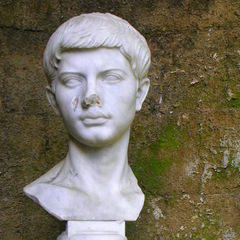
Virgil
Virgil

Virgil, a Roman poet, was born on October 15, 70 BC and died on September 21, 19 BC. He is one of the greatest poets in ancient Rome and is known for his epic poem, 'The Aeneid'. more

You May Also Like

“E tu troverai alla sinistra delle case di Ade una fonte, e accanto a essa un bianco cipresso diritto: a questa fonte non accostarti neppure, da presso. E ne troverai un'altra, fredda acqua che scorre dalla palude di Mnemosine: e davanti stanno i custodi. Di' loro: Sono figlio di Terra e di Cielo stellante, inoltre la mia stirpe è Celeste; e questo sapete anche voi. Sono riarsa di sete e muoio: ma date, subito, fredda acqua che scorre dalla palude di Mnemosine. Ed essi ti lasceranno bere dalla fonte divina, e in seguito tu regnerai assieme agli altri eroi. Di Mnemosine, questo è il sepolcro..." Laminetta trovata a Petelia Oblio e memoria sono i due strumenti del dissetamento. Se si beve dalla corrente dell'oblio si dimentica tutto e si rinasce a una nuova vita, cioè la sete è soltanto ingannata, e l'arsura non tarda a ripresentarsi in una nuova individuazione. Ma se si beve dalla fonte di Mnemosine, come testimoniano queste laminette, la memoria fa recuperare la conoscenza del passato e dell'immutabile, l'uomo riconosce la sua origine divina e si identifica in Dioniso, e l'arsura non viene spenta, ma dissetata, da una gelida, divina, prorompente conoscenza.”