Quotessence
Home / Quotes / Quote by George Orwell

Quote by George Orwell

“All the brass instruments and big drums in the world cannot turn ‘God Save the King’ into a good tune, but on the very rare occasions when it is sung in full it does spring to life in the two lines: Confound their politics, Frustrate their knavish tricks! And, in fact, I had always imagined that the second verse is habitually left out because of a vague suspicion on the part of the Tories that these lines refer to themselves.”

Quote by George Orwell

Author
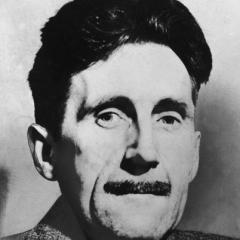
George Orwell
George Orwell

George Orwell, born Eric Arthur Blair, was a British novelist and political critic. Known for his sharp social criticism and profound insights into totalitarianism, Orwell is best remembered for his novels '1984' and 'Animal Farm', which remain influential to this day. more

You May Also Like

“I prayed devoutly that we could have some sort of System of government over here on Italian lines which would preserve the theory of democracy without any of its workings. Heaven knows, I am, and always have been, a friend of the People, and a democrat of democrats, but that has never prevented me from detesting and execrating the People at the same time with all my heart. The People to me have always been a great problem. It contains lots, I am sure, of very nice individuals. I have, in fact, met several charming proletarians in my various contacts at Grantly and during my elections. No one could be nicer for a few minutes. But when they are ail lumped together in a mass, how-ever charming they may have been as individuals, they become abominable. Thus the ordinary British workman is a capital fellow if you get him by himself. A mug of beer will enchant him. And if you get ten British workmen and give them ten mugs of beer, you will enchant them. But if you get a hundred thousand British workmen and start offering them a hundred thousand mugs of beer, you find you are up against a Trades Union, and they all leap to their rickety feet and bawl that you are a dirty capitalist. That is why we Tories, fundamentally, dislike the Trades Unions. Our appeal to the working man is not the appeal of the rascally demagogue on the soap-box or the blasphemous howl of the sergeant to his platoon, but rather the quiet, persuasive, condescending charm of the gentleman to his valet.”

“There's a liberal story that limited opportunities, and barriers, lead to employment problems and criminal records, but then there's another story that has to do with norms, behaviors, and oppositional culture. You can't prove the latter statistically, but it still might be true.' Holzer thinks that both arguments contain truth and that one doesn't preclude the other. Fair enough. Suffice it to say, though, that the evidence supporting structural inequality is compelling. In 2001, a researcher sent out black and white job applicants in Milwaukee, randomly assigning them a criminal record. The researcher concluded that a white man with a criminal record had about the same chance of getting a job as a black man without one. Three years later, researchers produced the same results in New York under more rigorous conditions.”

“Elites do often make the environment worse and block solutions, but to blame the problem of elite capture entirely on their moral successes and failures is to confuse effect for cause. The true problem lies in the system itself, the built environment and rules of interaction that produced the elites in the first place.”

“There is an enormous difference between seeing people as the victims of innate shortcomings and seeing them as the victims of structural violence. Indeed, it is likely that the struggle for rights is undermined whenever the history of unequal chances, and of oppression, is erased or distorted.”

“The pandemic and the growth in technology have compounded the evolution of more polarized views. We have seen an uptick in the encroachment of each other’s boundaries, discrimination, and outright violence. But we don’t just get to blame the new kids on the block. We already had these issues to begin with, and clearly the pandemic hit certain communities harder than others, communities that were already suffering long before the pandemic.”

“The Pension Dressler stood in a side street and had, at first glance, the air rather of a farm than of a hotel. Frau Dressler's pig, tethered by one hind trotter to the jamb of the front door, roamed the yard and disputed the kitchen scraps with the poultry. He was a prodigious beast. Frau Dressler's guests prodded him appreciatively on the way to the dining-room, speculating on how soon he would be ripe for killing. The milch-goat was allowed a narrower radius; those who kept strictly to the causeway were safe, but she never reconciled herself to this limitation and, day in, day out, essayed a series of meteoric onslaughts on the passers-by, ending, at the end of her rope, with a jerk which would have been death to an animal of any other species. One day the rope would break; she knew it, and so did Frau Dressler's guests.”

Book:Scoop