Quotessence
Home / Quotes / Quote by Oscar Wilde

Quote by Oscar Wilde

“How pale the Princess is! Never have I seen her so pale. She is like the shadow of a white rose in a mirror of silver.”
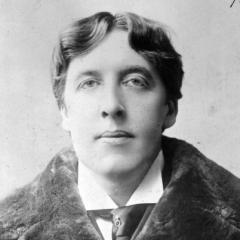
Quote by Oscar Wilde

Book:Salomé

Work

Salomé

Browse quotes and source details for this work. more

Author

Oscar Wilde
Oscar Wilde

Oscar Wilde, born on October 16, 1854, in Ireland, and died on November 30, 1900, was a renowned Irish writer, playwright, and poet. His works are known for their wit, satire, and unique style, with notable works including 'The Picture of Dorian Gray' and 'Lady Windermere's Fan'. more

You May Also Like

“There is much pain that is quite noiseless; and vibrations that make human agonies are often a mere whisper in the roar of hurrying existence. There are glances of hatred that stab and raise no cry of murder; robberies that leave man or woman forever beggared of peace and joy, yet kept secret by the sufferer—committed to no sound except that of low moans in the night, seen in no writing except that made on the face by the slow months of suppressed anguish and early morning tears. Many an inherited sorrow that has marred a life has been breathed into no human ear.”

“I am not sad, he would repeat to himself over and over, I am not sad. As if he might one day convince himself. Or fool himself. Or convince others—the only thing worse than being sad is for others to know that you are sad. I am not sad. I am not sad. Because his life had unlimited potential for happiness, insofar as it was an empty white room. He would fall asleep with his heart at the foot of his bed, like some domesticated animal that was no part of him at all. And each morning he would wake with it again in the cupboard of his rib cage, having become a little heavier, a little weaker, but still pumping. And by the midafternoon he was again overcome with the desire to be somewhere else, someone else, someone else somewhere else. I am not sad.”

“A tear rolled down my cheek And more came down Until tears rolled down like a stream. My eyes were blind with tears for you. They washed my eyes till I could see.”

“It was them and not them, maybe the ones they’d never been. I could almost see those others standing in the garden where the pea plants were, feet planted between the rows. They stood without moving, their faces glowing with some shine a long time gone. A time before I lived. Their arms hung at their sides. They’d always been there, I thought blearily, and they’d always wanted to be more than they were. They should always be thought of as invalids, I saw. Each person, fully grown, was sick or sad, with problems attached to them like broken limbs. Each one had special needs. If you could remember that, it made you less angry. They’d been carried along on their hopes, held up by the chance of a windfall. But instead of a windfall there was only time passing. And all they ever were was themselves. Still they had wanted to be different. I would assume that from now on, I told myself, wandering back into the barn. What people wanted to be, but never could, traveled along beside them. Company.”