Quotessence
Home / Quotes / Quote by Muriel Rukeyser

Quote by Muriel Rukeyser

Author

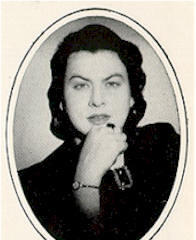
Muriel Rukeyser
Muriel Rukeyser

Muriel Rukeyser was an American poet known for her innovative use of language and her exploration of social and political themes. Born on December 15, 1913, she was a prominent figure in the literary world, particularly during the mid-20th century. Rukeyser's work often reflected her deep engagement with the human condition and her commitment to social justice. more

You May Also Like

“The reason [James Clerk] Maxwell's Demon cannot exist is that it does take resources to perform an act of discrimination. We imagine computation is free, but it never is. The very act of choosing which particle is cold or hot itself becomes an energy drain and a source of waste heat. The principle is also known as "no free lunch." We do our best to implement Maxwell's Demon whenever we manipulate reality with our technologies, but we can never do so perfectly; we certainly can't get ahead of the game, which is known as entropy. All the air conditioners in a city emit heat that makes the city hotter overall. While you can implement what seems to be a Maxwell's Demon if you don't look too far or too closely, in the big picture you always lose more than you gain. Every bit in a computer is a wannabe Maxwell's Demon, separating the state of "one" from the state of "zero" for a while, at a cost. A computer on a network can also act like a wannabe demon if it tries to sort data from networked people into one or the other side of some imaginary door, while pretending there is no cost or risk involved.”

“Throughout the Middle Ages, Jews had no part in the culture of Christian countries, and were too severely persecuted to be able to make contributions to civilization, beyond supplying capital for the building of cathedrals and such enterprises. It was only among the Mohammedans, at that period, that Jews were treated humanely, and were able to pursue philosophy and enlightened speculation. Throughout the Middle Ages, the Mohammedans were more civilized and more humane than the Christians. Christians persecuted Jews, especially at times of religious excitement; the Crusades were associated with appalling pogroms. In Mohammedan countries, on the contrary, Jews at most times were not in any way ill treated. Especially in Moorish Spain, they contributed to learning; Maimonides (1135–1204), who was born at Cordova, is regarded by some as the source of much of Spinoza’s philosophy.Mohammedan civilization in its great days was admirable in the arts and in many technical ways, but it showed no capacity for independent speculation in theoretical matters. Its importance, which must not be under-rated, is as a transmitter. Between ancient and modern European civilization, the dark ages intervened. The Mohammedans and the Byzantines, while lacking the intellectual energy required for innovation, preserved the apparatus of civilization—education, books, and learned leisure. Both stimulated the West when it emerged from barbarism—the Mohammedans chiefly in the thirteenth century, the Byzantines chiefly in the fifteenth.”

“It is the way in which the Dark returns, Harrier. I will explain, if you like." "Oh, no," Harrier said. "I'd much rather not know a thing about what we're facing. Let me get dressed first." A few minutes later Harrier came back, dressed for the day. He made another cup of hot cordial for Tiercel, refilled the kettle and started the water brewing for tea, and set some dried fruit to soak for griddle-cakes. "Okay. Now. Ruin my day," he invited.”

“Every time people give me presents, it just makes trouble." He thought of his Naming Day party, and the gift from his Uncle Alfrin that had actually started all this. "Especially if it's books. Someone gave me a book as a present once." "Then you'll know exactly what to do with these. Come on. Don't be shy. You'll hurt my feelings.”