“No, it is not a commonplace, sir! If up to now, for example, I have been told to 'love my neighbor,' and I did love him, what came of it?. . . What came of it was that I tore my caftan in two, shared it with my neighbor, and we were both left half naked, in accordance with the Russian proverb which says: If you chase several hares at once, you won't overtake any one of them. But science says: Love yourself before all, because everything in the world is based on self-interest. If you love only yourself, you will set your affairs up properly, and your caftan will also remain in one piece. And economic truth adds that the more properly arranged personal affairs and, so to speak, whole caftans there are in society, the firmer its foundations are and the better arranged its common cause. It follows that by acquiring for everyone, as it were, and working so that my neighbor will have something more than a torn caftan, not from private, isolated generosities now, but as a result of universal prosperity.”
Quote by Fyodor Dostoevsky
Book:Crime and Punishment
Work
Crime and Punishment
Fyodor Dostoevsky's 'Crime and Punishment' delves into the psychological and philosophical complexities of a man's act of murder and the subsequent struggle with his own conscience. The novel is renowned for its exploration of the Russian soul and the nature of free will versus determinism. more
Author
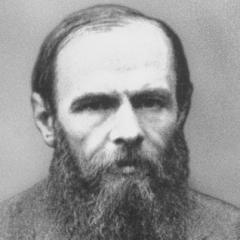
Fyodor Dostoevsky
A renowned Russian novelist and a pioneer of psychological novels. His works deeply reveal the complexity of human nature and the injustice of society, having a profound impact on literature worldwide. more
You May Also Like
“Their branches shook as if trying to dislodge beetles crawling up their bony arms.”
Source: The Swan Lake Murders
Source: The Wasp Trap
Source: Scavenger Hunt
Source: Promchanted
Source: Devoted
“Nature is one of the representations of the Universal mind.”
Source: Indigo Diaries: A Series of Novels
Source: A History of Elitism, World Government & Population Control