“One thing more makes these men and women from the age of wigs, swords, and stagecoaches seem surprisingly contemporary. This small group of people not only helped to end one of the worst of human injustices in the most powerful empire of its time; they also forged virtually every important tool used by citizens’ movements in democratic countries today. Think of what you’re likely to find in your mailbox—or electronic mailbox—over a month or two. An invitation to join the local chapter of a national environmental group. If you say yes, a logo to put on your car bumper. A flier asking you to boycott California grapes or Guatemalan coffee. A poster to put in your window promoting this campaign. A notice that a prominent social activist will be reading from her new book at your local bookstore. A plea that you write your representative in Congress or Parliament, to vote for that Guatemalan coffee boycott bill. A “report card” on how your legislators have voted on these and similar issues. A newsletter from the group organizing support for the grape pickers or the coffee workers. Each of these tools, from the poster to the political book tour, from the consumer boycott to investigative reporting designed to stir people to action, is part of what we take for granted in a democracy. Two and a half centuries ago, few people assumed this. When we wield any of these tools today, we are using techniques devised or perfected by the campaign that held its first meeting at 2 George Yard in 1787. From their successful crusade we still have much to learn. If, early that year, you had stood on a London street corner and insisted that slavery was morally wrong and should be stopped, nine out of ten listeners would have laughed you off as a crackpot. The tenth might have agreed with you in principle, but assured you that ending slavery was wildly impractical: the British Empire’s economy would collapse. The parliamentarian Edmund Burke, for example, opposed slavery but thought that the prospect of ending even just the Atlantic slave trade was “chimerical.” Within a few short years, however, the issue of slavery had moved to center stage in British political life. There was an abolition committee in every major city or town in touch with a central committee in London. More than 300,000 Britons were refusing to eat slave-grown sugar. Parliament was flooded with far more signatures on abolition petitions than it had ever received on any other subject. And in 1792, the House of Commons passed the first law banning the slave trade. For reasons we will see, a ban did not take effect for some years to come, and British slaves were not finally freed until long after that. But there was no mistaking something crucial: in an astonishingly short period of time, public opinion in Europe’s most powerful nation had undergone a sea change. From this unexpected transformation there would be no going back.”
Quote by Adam Hochschild
Work
Bury the Chains: Prophets and Rebels in the Fight to Free an Empire's Slaves
Browse quotes and source details for this work. more
Author
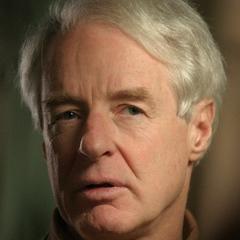
Adam Hochschild
Adam Hochschild is an American author renowned for his historical works. His writing often focuses on social justice and human suffering, particularly historical events of the 19th and 20th centuries. His style is well-received by readers for its in-depth research and vivid storytelling. more
You May Also Like
Source: On Fire : The Burning Case for a Green New Deal
Source: Reparations Maze
“A true democracy is conducted in the open, and open government is the enemy of all bad government.”
Source: Binding Chaos: Mass Collaboration on a Global Scale
Source: The Time of Our Singing
Source: Me, Not You: The Trouble with Mainstream Feminism