Quotessence
Home / Quotes / Quote by Oscar Wilde

Quote by Oscar Wilde

“Pain is not the ultimate mode of perfection. It is merely provisional and a protest. It has reference to wrong, unhealthy, unjust surroundings. When the wrong, and the disease, and the injustice are removed, it will have no further place. It will have done its work. It was a great work, but it is almost over. Its sphere lessens every day.”

Quote by Oscar Wilde

Work

The Soul of Man under Socialism

This work delves into the essence of human nature and its interaction with socialist ideologies, offering a critical analysis of the impact of social systems on the individual. more

Author
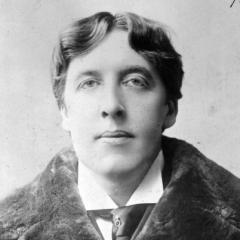
Oscar Wilde
Oscar Wilde

Oscar Wilde, born on October 16, 1854, in Ireland, and died on November 30, 1900, was a renowned Irish writer, playwright, and poet. His works are known for their wit, satire, and unique style, with notable works including 'The Picture of Dorian Gray' and 'Lady Windermere's Fan'. more

You May Also Like

“We will be greatly misled if we feel that the problem will work itself out. Structures of evil do not crumble by passive waiting. If history teaches anything, it is that evil is recalcitrant and determined, and never voluntarily relinquishes its hold short of an almost fanatical resistance. Evil must be attacked by a counteracting persistence, by the day-to-day assault of the battering rams of justice.”

“I think that, in reality, there is something wrong with human beings, and unless we are willing to face the fact that something is really wrong with human beings, unless we are willing to face the fact that somewhere in our imaginations we are evil, vicious people, it is not going to work.”

“Each time something contingent and impermanent is raised to the status of something necessary and permanent, a devil is created. Whether it be an ego, a nation-state, or a religious belief, the result is the same. The distortion severs such things from their embeddedness in the complexities, fluidities, and ambiguities of the world and make them appear as simple, fixed, and unambiguous entities with the power to condemn or save us.”

“Before Armand had granted me the esteem of which I have already spoken, I probably would not have betrayed him. The mere idea would have horrified me. So long as he had not given me his confidence, betraying him had no meaning: it meant simply obeying the elementary rule which governed my life. But now I loved him. I recognized his omnipotence. And though he might not love me, he contained me within him. His moral authority was so absolute, so generous, that it made intellectual rebellion within his bosom impossible. The only way I could prove my independence was by acting on the emotional level. The idea of betraying Armand set me aglow. I feared and loved him too much not to want to deceive and betray and rob him. I sensed the anxious pleasure that goes with sacrilege. If he were God (he had known pity), and had he been well pleased with me, it were sweet to deny him. And better still, that Stilitano, who did not love me and whom I would never have betrayed, should be helping me. His sharp personality aptly suggested the image of a dagger piercing the heart. The strength of the devil and his power over us lie in his irony. His seductiveness may be only his detachment. The force with which Armand denied the rules proved his own power—and the power of the rules over him. Stilitano smiled at them. His smile dissolved me. It was bold enough to express itself on a face of great beauty.”

“There is a kind of laughter that sickens the soul. Laughter when it is out of control: when it screams and stamps its feet, and sets the bells jangling in the next town. Laughter in all its ignorance and its cruelty. Laughter with the seed of Satan in it. It tramples upon shrines; the belly-roarer. It roars, it yells, it is delirious: and yet it is as cold as ice. It has no humour. It is naked noise and naked malice.”