Quotessence
Home / Quotes / Quote by Zadie Smith

Quote by Zadie Smith

“Reading seems to be easier to defend than writing. Writing is a far larger act of presumption. Sensing this, we seek to shore up the act of writing with false defenses, like the dubious idea that one could ever be absolutely “correct” when it comes to representing fictional human behavior. I understand the desire—I have it myself—but what I don’t get is how anyone can possibly hope to achieve it. What does it mean, after all, to say “A Bengali woman would never say that!” or “A gay man would never feel that!” or “A black woman would never do that!”? How can such things possibly be claimed absolutely, unless we already have some form of fixed caricature in our minds? (It is to be noted that the argument “A white man would never say that!” is rarely heard and is almost structurally unimaginable. Why? Because to be such a self is to be afforded all possible human potentialities, not only a circumscribed few.)”

Quote by Zadie Smith

Author
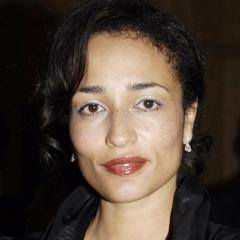
Zadie Smith
Zadie Smith

Zadie Smith is a British novelist known for her distinctive literary style and profound social insights. Her works cover a range of themes including race, class, gender, and identity, and have been widely appreciated by readers. more

You May Also Like

“But on one occasion he was lost for words. 'If it's all as bad as you describe,' asked an inconspicuous young man at the end of one of the lectures, 'then why did you choose to become a Gypsy?' His image of Gypsies had marked them as a mere lifestyle, a fashion, a brand.”

“Music is like spoken language, inextricable from its culture. If you don't learn a language early in life, its words will forever come out wrinkled and accented by another world, no matter how well you memorize or love the vocabulary, grammar, and cadences of a new language. This is why foreign "belly dancers" have always bothered me. The use of our music as a prop to wiggle and shimmy and jump around offends me. Eastern music is the soundtrack of me..”

“As a practitioner of Witchcraft, my drive is to learn as much magic as I can from whatever sources resonate with me. In those instances in which a practice, symbol, or deity speaks to me and demands my devotion, I make a commitment to honor the cultures from which they originated by pledging to study their histories, to listen to the voices of those who identify as part of those cultures, and, where possible, to support the living people who belong to that cultural group.”

“In college I was an editorial cartoonist for my school paper, The Daily Aztec...I did straight, news-oriented editorial cartoons. Occasionally, my Chicano background snuck in to the toons simply because I might do a César Chavez toon about how the School Student Board was too stupidly racist to allow him to speak on campus or other anti-frat toons on how they were so racist in doing fund-raisers for Tijuana kid charities--dressed in sombreros and begging with tin cups (from an interview in the book Attitude, 2002)”

“Do you know what surprised me most when I came to this country? The way witches are glorified. People here dress up as us for Halloween. They fill their TV shows and social media profiles with our aesthetics. It's like they've forgotten that, for most of human history, witches were something to mutilate, not emulate. Women who were seen as outcasts—too queer, too brown, too unwell...Any one of us on the margins was a target. To me, a pointy hat and a broomstick are not a cute costume; they are a reminder that, for centuries, people were brutalized under the mere assumption they might be what we actually are.”

“Virtually every fact used in business, political life and every day human relations is derived from other 'facts' or assumptions that have been shaped, deliberately or not, by the preexisting power structure. Every fact thus has a power history and what may be called a power future.”