Quotessence
Home / Quotes / Quote by Bruno Latour

Quote by Bruno Latour

Work

Reassembling the Social: An Introduction to Actor-Network-Theory

This book delves into the theoretical framework of Actor-Network-Theory, examining how social entities and networks are formed and evolve. It offers insights into the interactions between individuals and the broader social systems they are part of. more

Author
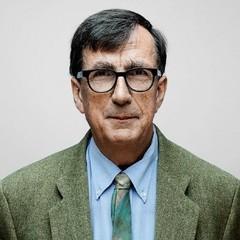
Bruno Latour
Bruno Latour

Bruno Latour is a French sociologist renowned for his contributions to the sociology of scientific knowledge. His research focuses on scientific practice, knowledge production, and the interactions between science and society. Latour's work has had a profound impact on understanding how science is constructed and communicated. more

You May Also Like

“It’s not that I hate everyone outside of England. I don’t. I don’t hate people from Syria, Afghanistan or Somalia. How could I? I don’t know them. How could I hate someone I don’t even know? That would take a special kind of madness. But if they refuse to make a useful contribution to society then we should send them back where they came from because we just can’t afford them anymore. It’s 10.30 p.m. and my front door’s locked. Why? Certainly not because I hate everyone OUTSIDE the front door, but because I love everyone INSIDE. Nobody’s telling me not to not to lock my front door. Or are they? The EU certainly is.”

“I talked to Llewellyn and got a thick briefing packet with the key arguments on both sides. The problem, for those who wanted to stay in the EU, was that many of the arguments for Brexit were built on lies: about how much the UK paid into the European Union; about how Brexit wouldn’t hurt the British economy. Another problem was that the Brexit campaign was tapping into the same sense of nationalism and nostalgia that the Trump campaign was promoting back home: the days of Churchill, the absence of immigrants and intrusive international institutions. The arguments for staying in the EU were grounded in facts, not emotion: The EU was Britain’s largest market. The EU offered Britain a stronger voice in global affairs. Even the name of the campaign—Remain—sounded like a concession that life wasn’t going to be all that you hoped it would be.”

“But nevertheless, what remains - very broadly diffused through the modern British consciousness - is a warmish afterglow generated by a sense that Britain's record in the last two hundred years is on the whole a source of legitimate pride. This in turn nourishes a sense that Britain deserves a special place in the pantheon of the world - that we are not just a small country at the European end of the Eurasian landmass.”