Quotessence
Home / Quotes / Quote by Mahmoud Darwish

Quote by Mahmoud Darwish

“One day I'lI become what I want One day I will become a thought that no sword or book can dispatch to the wasteland A thought equal to rain on the mountain split open by a blade of grass where power will not triumph and justice is not fugitive”

Quote by Mahmoud Darwish

Book:Mural

Work

Mural

Browse quotes and source details for this work. more

Author

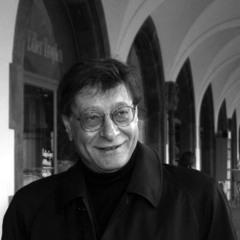
Mahmoud Darwish
Mahmoud Darwish

Mahmoud Darwish was a renowned Lebanese poet known for his profound poetry and strong nationalist sentiments. His works extensively explored the sufferings and hopes of the Palestinian people, profoundly influencing Middle Eastern literature. more

You May Also Like

“Rzecz w tym, że rozwój kapitalizmu i rewolucja przemysłowa w Europie nie wzięły się znikąd. Stały się one możliwe dzięki towarom produkowanym przez niewolników na terenach zagrabionych skolonizowanym ludom oraz przetwarzanym w fabrykach obsadzonych europejskimi chłopami, których siłą pozbawiono dostępu do ziemi przez grodzenia. Zwykle rozpatrujemy każdy z tych procesów osobno, tymczasem wszystkie one były elementami tego samego projektu i opierały się na tej samej logice. Grodzenia stanowiły proces kolonizacji wewnętrznej, kolonizacja zaś była w istocie procesem ogradzania. Europejscy chłopi zostali wyzuci z ziemi tak samo jak rdzenni Amerykanie (choć trzeba przyznać, że tych ostatnich spotykał o wiele gorszy los — nie przyznawano im żadnych praw, a nieraz nawet negowano ich człowieczeństwo). Handel niewolnikami zaś to nic innego jak grodzenie i kolonizacja ludzkich ciał, zawłaszczanych tak jak ziemia w celu akumulacji nadwyżki i tak jak ziemia traktowanych jako czyjaś własność.”

“* The well-known Marxist Beer Borochov was not free from biology. Zionist socialism shared the same conceptual mechanisms, and it too padded them with universalist rhetoric, though of a different sort. As we heard in the third chapter, Borochov regarded the Palestinian fellaheen as an integral part of the Jewish race, a population that could easily be welded into the steel structure of socialist Zionism. So did his disciples and the future founders of the State of Israel, Ben-Gurion and Yitzhak Ben-Zvi, until the Arab uprising of 1929. Initially, Borochov contended that, since the locals were as much descendants of the ancient people of Judea as were all the world's Jews, they should be taken back into the body of the nation while becoming acculturated in a secular manner. The Zionist left would never have considered admitting into the warm bosom of the Jewish people Muslim peasants of a different biological origin, but after the 1929 pogroms, these Muslim peasants became complete strangers with astonishing speed.”

“The recent renewal of hostilities in the Middle East and cross-border casualties and damage prove once again the fragility of unilateral decisions and quick fixes and their failure to ensure safety and STABILITY. Israelis and Palestinians need to move fast towards a permanent settlement to enjoy lasting peace and SECURITY.”

“Some see the attacks on 7 October as a grave mistake that only led to further devastating punishment. This is a linear perspective, however, when you consider that first Palestine had little real choice but desperate retaliation after many decades of theft, humiliating cruelty and subjugation. Secondly, that the abhorrent response by Israel was really quite predictable to every Palestinian and even anticipated, and lastly the recognition that there has never in history been any meaningful revolution or striving toward independence without tremendous sacrifice and turmoil.”

“Gaza may force us to glimpse into the heart of darkness, but it equally reveals the heart of humanity that never gives up. Gaza is not a footnote, it is the later than life shadow of the colonizer's fear: captivating, awesome, mythical, mesmerizing, extraordinary, impressive, monumental, unreal, burdensome, miraculous, and most of all, durable. Gaza is our obligation.”