Quotessence
Home / Quotes / Quote by Dean Koontz

Quote by Dean Koontz

“Dear, the man can't be eviscerated because he has no viscera. He's a walking colon. If you cut him open, you only end up covered in crap.”

Quote by Dean Koontz

Work

Relentless

Browse quotes and source details for this work. more
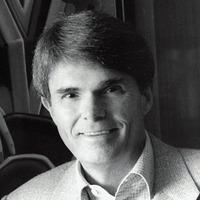
Author

Dean Koontz
Dean Koontz

Renowned American author known for his suspense and horror novels. He has been writing since the 1970s and his works have been widely popular, winning numerous international awards. more

You May Also Like

“What is the use of the colon? What is a colon? Generally it opens onto an explanation, but it is always done with the help of an interruption. It can be said that the colon is not the period, it is the period of the period, the canceling of the period. It is a moment mute and marked; it is the most delicate tattoo of the text. It is also in place of, instead of, everything that would be causal. For example, when we read: "It's simply that: secret." "Secret," is a sentence, it is the shortest sentence perhaps. But it is a sentence in one word. It is a sentence that is secret and that at the same time says its name. One could invert and say: "Secret: it is simply that." This is secret, the secret is the secret of this, it is a word which makes infinite sense all by itself, it is a sentence which performs the secret itself [Clarice Lispector, The Stream of Life, trans Elizabeth Lowe & Earl Fitz, Foreword by Hélène Cixous trans Verena Conley, Minneapolis: University of Minnesota Press, 1989]”

“Every aspect of Nature reveals a deep mystery and touches our sense of wonder and awe. Those afraid of the universe as it really is, those who pretend to nonexistent knowledge and envision a Cosmos centered on human beings will prefer the fleeting comforts of superstition. They avoid rather than confront the world. But those with the courage to explore the weave and structure of the Cosmos, even where it differs profoundly from their wishes and prejudices, will penetrate its deepest mysteries.”

“Ang pag-ibig ay tila isa ring pananakop at ang mangingibig, isang dakilang mananakop; nais mo ng kasagutan at katubusan sa sarili mong pag-iisa, sa sarili mong kahinaan, sa mga katanungang hindi matapus-tapos ni matukoy sa simula. Ang trahedya ng pag-ibig ay kung sakaling makamtan mo na ang iniibig, hindi mo na alam kung ano ang gagawin mo sa kanya na nasa iyong mga kamay, at ayaw mo naman siyang pakawalan dahil hindi mo na makita ang pagkakaiba ng lumaya at umibig. Inaakala mo na kasi na ikaw at siya ay iisa, tinanggap mo na nang walang pagdududa na siya na ang iyong kahinaan o pinagmumulan ng lakas at ikaw ang kanyang kahinaan at pinagmumulan din ng lakas. At inaakala mo na ang nakaraan at bukas niya ay hawak mo sa iyong mga palad—at ganoon din siya sa iyo. Na ikaw, ikaw palagi ang nasa kanyang nakaraan. Na ang umibig ay ang tanging dakila at banal sa buhay. Malupit na pananakop ang umibig kaya ko ito kinatatakutan.”

Book:Colon