“Tant qu'on va et vient dans la pays natal, on s'imagine que ces rues vous sont indifférentes, que ces fenêtres, ces toits et ces portes ne vous sont de rien, que ces murs vous sont étrangers, que ces arbres sont les premiers arbres venue, que ces maisons où l'on n'entre pas vous sont inutiles, que ces pavés où l'on marche sont des pierres. Plus tard, quand on n'y est plus, on s'aperçoit que ces rues vous sont chères, que ces toits, ces fenêtres et ces portes vous manquent, que ces murailles vous sont nécessaires, que ces arbres sont vos bien-aimées, que ces maisons où l'on n'entrait pas on y entrait tous les jours, qu'on a laissé de ses entrailles, de son sang et de son coeur dans ces pavés. Tous ces lieux qu'on ne voit plus, qu'on ne reverra jamais peut-être, et dont on a gardé l'image, prennent un charme douloureux, vous reviennent avec la mélancolie d'une apparition, vous font la terre sainte visible, et sont, pour ainsi dire, la forme même de la France et on les aime et on les évoque tels qu'ils sont, tels qu'ils étaient, et l'on s'y obstine, et l'on n'y veut rien changer, car on tient à la figure de la patrie comme au visage de sa mère.”
Quote by Victor Hugo
Book:Les Misérables
Work
Les Misérables
Victor Hugo's 'Les Misérables' is an epic narrative that delves into the lives of various characters, including Jean Valjean, a former convict seeking redemption, and Fantine, a woman struggling in poverty. The story is rich in historical detail and moral complexity, offering a profound examination of society's flaws and the resilience of the human spirit. more
Author
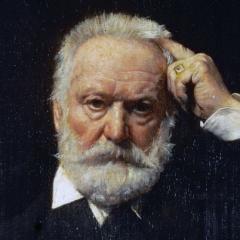
Victor Hugo
Victor Hugo, a French romantic poet, novelist, and playwright, was born on February 26, 1802, and died on May 22, 1885. He is considered one of the greatest writers in French literary history, known for his profound humanistic concerns and rich imagination. more
You May Also Like
Source: The Farming of Bones
Source: Anna and the French Kiss
Source: 1984
Source: The Beauty of Humanity Movement
Source: Killing Maine