Quotessence
Home / Quotes / Quote by Sheldon Vanauken

Quote by Sheldon Vanauken

Work

A Severe Mercy: A Story of Faith, Tragedy, and Triumph

Browse quotes and source details for this work. more

Author
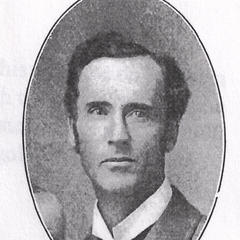
Sheldon Vanauken
Sheldon Vanauken

Sheldon Vanauken (1914-1996) was an American author and scholar, best known for his memoir "A Severe Mercy" about his friendship with C.S. Lewis. Born on August 4, 1914, Vanauken studied at Oxford University, where he befriended the renowned writer C.S. Lewis. His book, published in 1977, chronicles his deep love for his wife Jean Davis and their spiritual journey alongside Lewis. Vanauken's elegant prose and profound exploration of faith and friendship have made his work a classic in religious literature, continuing to inspire readers worldwide. more

You May Also Like

“For anyone who was ever told they were too much or not enough, who tried to fit into boxes that were never made for them, who was told to quiet their spark or dim their light to make others comfortable, and who has been waiting their whole lives to hear: You are exactly right as you are. It is your time to thrive.”

“Thirty years ago, I lay in the womb of a woman, conceived in a sexual act of rape, being carried during the prenatal period by an unwilling and rebellious mother, finally bursting from the womb only to be tormented in a family whose members I despised or pitied, and brought into association with people whom I should never have chosen. Sometimes I wish that, as I lay in the womb, a soft pink embryo, I had somehow thought, breathed or moved and wrought destruction to the woman who bore me, and her eight miserable children who preceded me, and the four round-faced mediocrities who came after me, and her husband, a monstrously cruel, Christ-like, and handsome man with an animal’s appetite for begetting children.”

“If the floating cultura contained its fair share and then some of subsidized children of fortune, wealthy sybarites, refugees from ennui, and their attendant parasitic organisms, did these not serve as a communal matrix for the merchants, artists, scientist, aesthetes, and pilgrims who travelled among the stars for higher purposes? In ancient days, the courts of monarchs served as similar distillations of the more rarefied essences of human culture; these too were gilded cages filled with self-pampered birds of paradise, but in their precincts were to be found the philosophers, artists, and mages of the age.”