Quotessence
Home / Quotes / Quote by Alex North

Quote by Alex North

Work

The Whisper Man

Browse quotes and source details for this work. more
Author

Alex North
Alex North

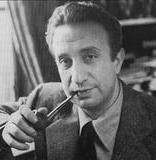
Alex North, born on December 4, 1910, was a renowned British composer. His musical works were characterized by their unique style, influenced by both classical and jazz music. North composed music for numerous films, television shows, and stage productions, known for his rich emotional expression and technical skill. His contributions have had a profound impact on musicians of later generations. more

You May Also Like

“If the floating cultura contained its fair share and then some of subsidized children of fortune, wealthy sybarites, refugees from ennui, and their attendant parasitic organisms, did these not serve as a communal matrix for the merchants, artists, scientist, aesthetes, and pilgrims who travelled among the stars for higher purposes? In ancient days, the courts of monarchs served as similar distillations of the more rarefied essences of human culture; these too were gilded cages filled with self-pampered birds of paradise, but in their precincts were to be found the philosophers, artists, and mages of the age.”

“Authenticity isn't a destination you reach - it's a daily choice to show up as yourself, even when the world asks you to be someone else. Your brain can learn to make this choice easier, one rewiring at a time.”

“Yet in the 1950s and '60s, a wide range of historians quickly and uncritically...[sought to] rule out of serious discussion of the American founding any suggestion that important, even defining, conflicts prevailed between rich, well-connected founders--those men of a variety of opinions of how government should work, who signed the Declaration of Independence and framed the U.S. Constitution--and the huge majority of unrich, ordinary Americans who--though we know so little about it--spent the founding era protesting, rioting, petitioning, occupying, and making demands on government in hopes of achieving access to economic development and restraining the power of wealth. That economic conflict wasn't between revolutionary Americans and British authorities. It was between Americans and other Americans. I've come to see it--not its resolution but the conflict itself--as defining our emergence as a people.”

“A stage adaptation of The Giver has been performed in cities and towns across the USA for years. More recently an opera has been composed and performed. And soon there will be a film. Does The Giver have the same effect when it is presented in a different way: It's hard to know. A book, to me is almost sacrosanct: such an individual and private thing. The reader brings his or her own history and beliefs and concerns, and reads in solitude, creating each scene from his own imagination as he does. There is no fellow ticket-holder in the next seat. The important thing is that another medium--stage, film, music--doesn't obliterate a book. The movie is here now, on a big screen, with stars and costumes and a score. But the book hasn't gone away. It has simply grown up, grown larger, and begun to glisten in a new way.”