Quotessence
Home / Quotes / Quote by Jean Baudrillard

Quote by Jean Baudrillard

“Fundamentally, the NORMAL human being always lives in a state of dependency or counter-dependency; he is dependent on his model (whatever it may be: model of action, social or imaginary project), but, at the same time, permanently challenging that model. He is motivated and counter-motivated in the same movement. There is no need for psychology or psychoanalysis or, indeed, any human science for this. These sciences exist only to reconcile the irreconcilable. As a consequence, human beings do always both what they need to for their model to succeed and all that is necessary for it to fail. Here again, there's no need of any weakening or perversion or death drive. It is from their primal duality that human beings derive this antagonistic energy. This is the normal human being and everything that sets about reconciling him with himself and finding a solution to the questions raised above is of the order of superstition and mystifIcation.”

Quote by Jean Baudrillard

Work

Why Hasn't Everything Already Disappeared?

Browse quotes and source details for this work. more

Author
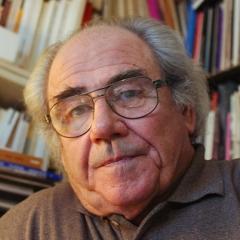
Jean Baudrillard
Jean Baudrillard

Jean Baudrillard was a French philosopher known for his critical studies on consumerism, media, and semiotics. His theories have had a profound impact on postmodernism and cultural studies. more

You May Also Like

“Even if we endorse the feasibility of shared experiences, a series of questions arise. The first one concerns the role of language in the formation of our thoughts and of our “inner life”. Musk assumes that our thoughts are present in our mind independently of their expression in language, so that if I connect my brain directly with another’s brain, the other individual will experience my thoughts directly in all their wealth and finesse, not distorted by the clumsiness and simplification of language. But what if language in all its clumsiness and simplification generates the elusive wealth of our thoughts? A thought’s true content actualises itself only through its linguistic expression – prior to this expression, it is nothing substantial, just a confused inner intention. I only learn what I wanted to say by effectively saying it. We think in words: even when we see and experience events and processes, their perception is already structured through our symbolic network. When I see a gun in front of me, all the meanings associated with it are symbolically overdetermined – I perceive a gun but this perception is given its specific spin by the word “gun” that resonates in it, and words always refer to universal notions. Therein resides the paradox of the symbolic overdetermination: when I perceive a real gun in front of me, the word “gun” awakens the rich texture of meaning associated with a gun.”

“I wanted him to point to something in particular; I wanted to know exactly what the problem was so I could fix it. I wished it could be like a difficult question on an exam. If I'd studied hard and prepared for it, I could solve it. Except people's feelings don't work that way, and my long-term relationship had gone up in smoke, even though, as far as I knew, nothing had started the fire.”

“Be a part of the world, but never in it.... Because of what we do, we have to interact with people. But we must be unseen shadows who move among them. Never let anyone know you. Never give them a chance to realize you don't age. Move through the darkness ever watchful, ever alert. We are all that stands between the humans and slavery. Without us, they all die and their souls are lost forever. Our responsibilities are great. Our battles numerous and legendary. But at the end of the night, you go home alone where no one knows what it is you have done to save the world that fears you. You can never bask in your glory. You can never know love or family. We are Dark-Hunters. We are forever powerful. We are forever alone.”