Quotessence
Home / Quotes / Quote by Arthur C. Clarke

Quote by Arthur C. Clarke

Work

Childhood’s End

Arthur C. Clarke's novel depicts a future where humanity achieves a utopian existence, only to face the loss of its individuality and the end of traditional childhood. more
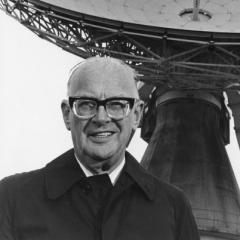
Author

Arthur C. Clarke
Arthur C. Clarke

Arthur C. Clarke was a British science fiction author, writer, and science popularizer. Known for his science fiction novels and predictions about future technology, his most famous works include '2001: A Space Odyssey' and 'Rendezvous with Rama'. Clarke's science fiction novels are not only literarily valuable but also had a profound impact on science fiction films and television. more

You May Also Like

“Let us admit that we have attended parties where for one brief night a republic of gratified desires was attained. Shall we not confess that the politics of that night have more reality and force for us than those of, say, the entire U.S. Government? Some of the "parties" we've mentioned lasted for two or three years. Is this something worth imagining, worth fighting for? Let us study invisibility, webworking, psychic nomadism--and who knows what we might attain?”

“...new discoveries show that American soldiers used the swastika as their symbol early in World War I, and up to 1941, against Germany. The symbol was used by Americans in the French Escadrille Lafayette, by the 45th Infantry Division, and on Boeing P-12 planes. The discoveries are in the growing body of work by the historian Dr. Rex Curry (author of 'Swastika Secrets'). He has previously shown how socialists in the USA originated the modern swastika as overlapping 'S' letters for 'Socialists' joining together in a utopian 'Socialist Society.”

“And so, it seems to me, it is with our prisons. They are filled with criminals which our virtuous State has made what they are by its iniquitous laws, its grinding monopolies, and the horrible social conditions that result from them. We enact many laws that manufacture criminals, and then a few that punish them. Is it too much to expect that the new social conditions which must follow the abolition of all interference with the production and distribution of wealth will in the end so change the habits and propensities of men that our jails and prisons, our policemen and our soldiers,—in a word, our whole machinery and outfit of defence,—will be superfluous? That, at least, is the Anarchists' belief. It sounds Utopian, but it really rests on severely economic grounds.”

“Tolstoy was not associated with any revolutionary group but his writings had a tremendous influence. A continuous stream of Utopians, rebels and cranks passed in and out of his doors. When I was a guest at Yasnaya Polyana, his country estate, I was shocked by the depth of his despondency, and after he had forecast, with a foresight given only to genius, the bloody upheavals to come, I left his presence deeply regretting that age, moral distress and spiritual loneliness rendered him incapable of looking joyfully forward to what many believed would be the birth of a great and enduring democratic Russian Republic.”