Quotessence
Home / Quotes / Quote by Iris Murdoch

Quote by Iris Murdoch

Work

The Green Knight

This classic tale of chivalry and adventure is set in the medieval period and explores themes of honor, bravery, and the supernatural. The protagonist, a knight, faces a daunting challenge from the enigmatic Green Knight, leading to a series of events that test his character and resolve. more
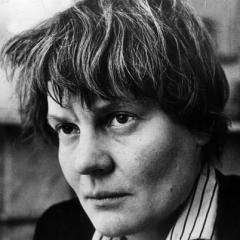
Author

Iris Murdoch
Iris Murdoch

Iris Murdoch was an Irish-Canadian philosopher and author, born on July 15, 1919, in Dublin, Ireland, and passed away on February 8, 1999. She is celebrated for her philosophical novels that intertwine moral and ethical dilemmas with complex narratives. Murdoch's work has left a lasting impact on the literary world, particularly in the latter half of the 20th century. more

You May Also Like

“No one has ever become a champion of success by staying in a place of fear. Those who became a success have one thing in common about them: they chose to overcome their fears. This is your turn!”

“At present, when people become aware of this [common metaphorical] imagery, they tend to think of it as merely a surface dressing of isolated metaphors - as a kind of optional decorative paint that is sometimes added to ideas after they are formed, so as to make them clear to outsiders. But really such symbolism is an integral part of our thought-structure. It does crucial work on all topics, not just in a few supposedly marginal areas such as religion and emotion, where symbols are known to be at home, but throughout our thinking.”

“The deer in procession resemble charcoal cave paintings rendered manifest. Art's magic working backwards. The chalk behind them, bone. And not the hare runs, too. The hare runs in the opposite direction to the deer. The animals runs, and the landscape seems then to be parting in front of me. Deer one way, hare the other. And now they are quite gone: the hare to the fieldmargin at the top of the hill to my left, the deer into the wood at the top of the hill to my right. There is nothing before me now but wind and chalk and wheat.”

“These poor souls. These poor pathetic souls.” The Emperor gestured toward the passersby. “I don’t understand,” Tommy said. “Their time has passed and they don’t know what to do. They were told what they wanted and they believed it. They can only keep their dream alive by being with others like themselves who will mirror their illusions.” “They have really nice shoes,” Tommy said. “They have to look right or their peers will turn on them like starving dogs. They are the fallen gods. The new gods are producers, creators, doers. The new gods are the chinless techno-children who would rather eat white sugar and watch science-fiction films than worry about what shoes they wear. And these poor souls desperately push papers around hoping that a mystical message will appear to save them from the new, awkward, brilliant gods and their silicon-chip reality. Some of them will survive, of course, but most will fall. Uncreative thinking is done better by machines. Poor souls, you can almost hear them sweating.”