Quotessence
Home / Quotes / Quote by Nigel Slater

Quote by Nigel Slater

“There is a smell, rich and sickly sweet, so pungent I feel as if I am being choked. A smell that is both new and curiously familiar. Notes of the most intense jasmine with a back note of vanilla and overripe mango. The sea is too warm, and I cut short my night swim. As I pass through the garden, lanterns now glowing, the perfume has faded a little, it is less hypnotic, softer and more floral than before. Trumpets of deep-crimson hibiscus have closed for the night, chains of bougainvillea and a plant I do not know are the only ones in flower. It is this last from which the scent is emanating. Each blossom has thick white petals, crisp, like icing on a wedding cake. Almost too perfect to be real, the petals darken in the centre to a pale-yellow with a deep-saffron eye. Strangely, the scent is stronger from a distance than close up. My mystery flower is frangipani, or if we are talking in botanical terminology, Plumeria, the name given to honor the seventeenth-century French monk and botanist Charles Plumier. I note that the almond filling known as frangipane was once perfumed with the extract, though we are a long, long way from Bakewell. There are few perfumes I would call hypnotic-- tuberose, Casablanca lily, jasmine perhaps-- but frangipani is up there with them. I go back to my room, head throbbing, drunk on flowers.”

Quote by Nigel Slater

Work

A Thousand Feasts: Small Moments of Joy… A Memoir of Sorts

Browse quotes and source details for this work. more

Author
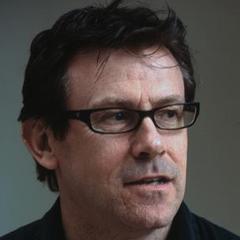
Nigel Slater
Nigel Slater

Nigel Slater is a distinguished British writer known for his culinary expertise and literary contributions. Born on April 9, 1958, Slater has made substantial contributions to the field of gastronomy through his cookbooks, columns, and television appearances. His work often centers on the joy of cooking and the significance of food in daily life. more

You May Also Like

“A huge advertisement in the unmistakably bright red tones of Vodacom, the global mobile phone giant, looked on this tawdry scene. It read to me like a distilled message about the only values that remained in this country, whose leaders were once committed Marxists: money and power.”

“That is the Mozambique border over there, just beyond the second kopje, only seven or eight miles from here.' 'Mozambique, ' Claudia murmured, peering through her binoculars. 'The name has such a romantic ring to it.' 'Not so romantic. It's just another triumph of African socialism abd the carefully thought-out economic policy of chaos and ruination; Sean grunted. 'I cant take racism before breakfast; Claudia told him icily. 'All right; Sean grinned. 'Suffice it to say that just across the border there you have twelve years of Marxism, corruption, greed and incompetence, just beginning to bear fruit. You have a civil war raging out of control, famine that will probably starve a million people, and epidemic disease, including Aids, that will kill another million in the next five years.”

“Before we commence this guided tour of Mozambiquan paradise of the proletariat, this shining gem of African socialism, will you bear with me while I give you a few facts and figures. Nobody protested, so he went on. Until 1975 Mozambique was a Portuguese colony. For almost five hundred years it had been under Portuguese control and had been a reasonably happy and prosperous community of some fifteen million souls. The Portugese unlike the British or German colonists had a relaxed attitude towards miscegenation and the result was a large mulatto population, and an official policy of 'Assimilado' under which any person of colour , if he attained certain civilised standards, was considered to be white and enjoyed Portugese nationality. It all worked very well, as indeed did most colonial administrations, especially those of the British.' 'Bullshit,' said Claudia demurely. 'That's limey propaganda. 'Limey?" Sean smiled thinly. 'Carefull, your prejudice is showing, nonetheless your average Indian or African living today in a former British colony is a damned sight worse off now than he was then. Certainly that goes one hundred times more for your average black man living in Mozambique.' 'At least they are free,' Claudia cut in, and Sean laughed. 'This is freedom? an economy managed under the well-known socialist principles of chaos and ruination which has resulted in a negative growth rate of up to ten per cent per annum every year since the Portuguese withdrawal, a foreign debt amounting to double the gross national product, a total breakdown in the education system, and only five per cent of children regularly attending a recognised school, one doctor per forty five thousand persons, only one person in ten with access to purified drinking water, infant mortality at 340 per 1000 births. The only worse countries in the world are Afghanistan and Angola, but as you say, at least they are free. In America, where everyone eats three huge meals a day, freedom may be a big deal, but in Africa a full belly counts a hell of alot more'. 'It can't be as bad as that,' she protested. 'No,' he agreed. It's a lot worse. I haven't mentioned two other factors, the civil war and aids. When the Portugese were pushed out, they handed over to a dictator named Samaro Machel and his Frelimo party. Machel was an avowed Marxist. He didn't believe in the nonsense of elections, and his rule was directly responsible for the present condition of the country, and for the emergence of the National Mozambiquan resistance or as it is known to its freinds and admirers, Renamo. Nobody knows much about it, what its objectives are, who its leaders are, all we know it that it controls most of the country, especially the north, and that it made up of a pretty ruthless bunch of characters.' 'Renamo is a South African front organisation, directed, supplied and controlled from Pretoria,' Claudia helped him out. 'Committed to the overthrow of sovereign government and the destabilisation of the southern continent.' 'Well done, ducky, ' Sean nodded approval. 'You've been studying the wisdom and erudition of the Organisation of African Unity and the non-aligned nations. You have even mastered their jargon. If only South Africa had the military and technological capacity to commit half the skulduggery it is accused of, it would not be simply the most powerful country in Africa.”

“Since 1884 Bath Iron Works was incorporated by General Thomas W. Hyde who had served in the Union Army during the Civil War. At first the shipyard made iron hardware and windlasses for the wooden ships of the day but soon built warships for the United States Navy although it also started builting commercial vessels. The USS Machias a schooner rigged, steam driven, gunboat was one of two 190-foot (58 m) gunboats, first built by the company. It has been said that Chester Nimitz commanded the Machias during World War I, although this has not been substantiated. In 1892 the yard built their first commercial vessel, the 2,500-ton steel passenger steamer the SS City of Lowell. From these humble beginnings BIW became a major United States shipyard and has designed and built almost every type of naval vessel that the US Navy had or has, including the new stealth destroyers of the Zumwalt class. I first saw Bath Iron Works when I crossed the Kennebec River in 1952. I wrote about this in “Seawater One” describing how our bus crossed on the Carlton Lift Bridge and how I saw the USS Dealey (DE-1006) being built. During World War II, ships built at BIW were considered by Navy officers and sailors to be the toughest afloat, giving rise to the slogan "Bath-built is best-built." In 1995, BIW became a subsidiary of General Dynamics and at that time was the fifth-largest defense contractor in the world.”

“It was during the summer of 1952 when I first came through the center of Rockland on the bus, “I was impressed by the obvious ties the community had with the sea. The fishing and lobster industry was evident by the number of commercial fishing and lobster boats. Rockland was, and still is, the commercial hub of the mid-coastal region of the state.” The local radio station WRKD was an important source of local news and weather reports. This was also the radio station that opened each day’s broadcasting with Hal Lone Pine’s song, recorded on Toronto's Arc Records label: “There’s a winding lane on the Coast of Maine that is wound around my heart....” The United States Coast Guard still maintains a base in Rockland, which is reassuring to the families of those who go fishing out on the open waters of Penobscot Bay and the Gulf of Maine. Rockland remains the home of the Farnsworth Art Museum, which has an art gallery displaying paintings by Andrew Wyeth, as well as other New England artists.”

“Eight Bells: Robert J. Kane ‘55D died June 3, 2017, in Palm Harbor, Florida. He came to MMA by way of Boston College. Bob or “Killer,” as he was affectionately known, was an independent and eccentric soul, enjoying the freedom of life. After a career at sea as an Officer in the U.S. Navy and in the Merchant Marine he retired to an adventurous single life living with his two dogs in a mobile home, which had originally been a “Yellow School Bus.” He loved watching the races at Daytona, Florida, telling stories about his interesting deeds about flying groceries to exotic Caribbean Islands, and misdeeds with mysterious ladies he had known. For years he spent his summers touring Canada and his winters appreciating the more temperate weather at Fort De Soto in St. Petersburg, Florida…. Enjoying life in the shadow of the Sunshine Bridge, Bob had an artistic flare, a positive attitude and a quick sense of humor. Not having a family, few people were aware that he became crippled by a hip replacement operation gone bad at the Bay Pines VA Hospital. His condition became so bad that he could hardly get around, but he remained in good spirits until he suffered a totally debilitating stroke. For the past 6 years Bob spent his time at various Florida Assisted Living Facilities, Nursing Homes and Palliative Care Hospitals. His end came when he finally wound up as a terminal patient at the Hospice Facility in Palm Harbor, Florida. Bob was 86 years old when he passed. He will be missed….”

“Portland, Maine was the site of one of the northernmost skirmishes of the Civil War! Called the Battle of Portland Harbor, it happened in the waters off Portland harbor involving two ships flying the Confederate flag. On June 24, 1863, having been attacked by these ships, the Union Revenue Cutter Cushing was abandoned by her twenty-four crewmen. Captain Charles Reed a Confederate Navy Lieutenant Reed and the Captain of the Confederate raider, the CSS Tacony, ordered the Cushing torched, causing its munitions to explode. Late on June 26, 1863, Reed and an armed party came ashore dressed as fishermen and raided the city. Knowing that there was no chance of escaping, Captain Reed and his raiding party surrendered to Mayor McLellan and were held as prisoners of war at Fort Preble in South Portland. Because public sentiments were hostile against Reed and his men, they were taken to Boston and held at Fort Warren for the remainder of the Civil War.”

“The City of Boston allowed us to dock at the dilapidated Mystic Wharves, right next to where the ships from the Havana Line used to tie up. Without knowing it, we were witnessing the end of an era. Steamship companies that connected Cuba with the United States were dwindling, as commercial aviation came into its own. The Havana Line was already gone, and the New York & Cuba Mail Steamship Company, commonly called the Ward Line, was a shipping company that operated from 1841 until 1954 and ran “Whoopee Cruises” during the prohibition years. Because of a number of accidents, including the fire on the SS Morro Castle off Asbury Park on September 8, 1934, the company was left hanging on by a thread. In the mid-1950’s it was still possible to buy a round trip passage from Miami to Havana for about $45.00, which was a bargain, even in those days.”