Quotessence
Home / Quotes / Quote by Radclyffe Hall

Quote by Radclyffe Hall

“Could Stephen have met men on equal terms, she would always have chosen them as her companions; she preferred them because of their blunt, open outlook, and with men she had much in common—sport for instance. But men found her too clever if she ventured to expand, and too dull if she suddenly subsided into shyness. In addition to this there was something about her that antagonized slightly, an unconscious presumption. Shy though she might be, they sensed this presumption; it annoyed them, it made them feel on the defensive. She was handsome but much too large and unyielding both in body and mind, and they liked clinging women. They were oak-trees, preferring the feminine ivy. It might cling rather close, it might finally strangle, it frequently did, and yet they preferred it, and this being so, they resented Stephen, suspecting something of the acorn about her.”

Quote by Radclyffe Hall

Work

The Well Of Loneliness

This novel delves into the complexities of personal identity and the challenges faced by individuals who do not conform to societal expectations, particularly focusing on the protagonist's struggle with her sexual identity. more

Author
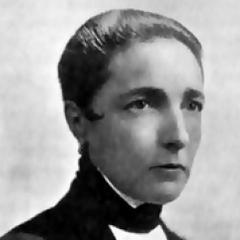
Radclyffe Hall
Radclyffe Hall

Radclyffe Hall, a British poet, was born on August 12, 1880, and passed away on October 7, 1943. Her poetry is known for its unique style and profound emotional expression. more

You May Also Like

“Captain Ramsay was kind-hearted, he would try very hard to be complimentary; his grey eyes would try to express admiration, polite admiration as they rested on Stephen. His voice would sound softer and more confidential, the voice that nice men reserve for good women, protective, respectful, yet a little sex-conscious, a little expectant of a tentative response. But Stephen would feel herself growing more rigid with every kind word and gallant allusion. Openly hostile she would be feeling, as poor Captain Ramsay or some other victim was manfully trying to do his duty.”

“She had only to call and Mary would come, bringing all her faith, her youth and her ardour. Yes, she had only to call, and yet—would she ever be cruel enough to call Mary? Her mind recoiled at that word; why cruel? She and Mary loved and needed each other. She could give the girl luxury, make her secure so that she need never fight for her living; she should have every comfort that money could buy. Mary was not strong enough to fight for her living. And then she, Stephen, was no longer a child to be frightened and humbled by this situation. There was many another exactly like her in this very city, in every city; and they did not all live out crucified lives, denying their bodies, stultifying their brains, becoming the victims of their own frustrations. On the contrary, they lived natural lives—lives that to them were perfectly natural. They had their passions like everyone else, and why not? They were surely entitled to their passions? They attracted too, that was the irony of it, she herself had attracted Mary Llewellyn—the girl was quite simply and openly in love. 'All my life I've been waiting for something...' Mary had said that, she had said: 'All my' life I've been waiting for something...I've been waiting for you.' Men—they were selfish, arrogant, possessive. What could they do for Mary Llewellyn? What could a man give that she could not? A child? But she would give Mary such a love as would be complete in itself without children. Mary would have no room in her heart, in her life, for a child, if she came to Stephen. All things they would be the one to the other, should they stand in that limitless relationship; father, mother, friend, and lover, all things—the amazing completeness of it; and Mary, the child, the friend, the beloved. With the terrible bonds of her dual nature, she could bind Mary fast, and the pain would be sweetness, so that the girl would cry out for that sweetness, hugging her chains always closer to her. The world would condemn but they would rejoice; glorious outcasts, unashamed, triumphant!”

“In her every small movement she was the woman of the future, a type that would swagger and curse, fall headlong, flaming into the hell of war, be as brave and tough as men, take the overflowing diarrhea of nervous frontline troops without grimacing, speak loudly and devastatingly, kick brain matter off their shoes and go unhurriedly on. When he looked at Bern, Viktor saw the future, and it was lovely and clean and as equal as things between men and women, between prole and patrician, could be.”