Quotessence
Home / Quotes / Quote by George Washington Carver

Quote by George Washington Carver

Author
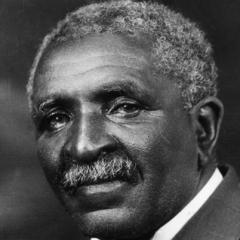
George Washington Carver

George Washington Carver was a renowned American scientist known for his work in plant research and agricultural improvement. Born into a slave family in Missouri, he rose to become a prominent agricultural chemist and inventor. Carver's research focused on the utilization of peanuts, soybeans, and other crops, and his contributions had a profound impact on American agriculture. more

You May Also Like

“When does a job feel meaningful? Whenever it allows us to generate delight or reduce suffering in others. Though we are often taught to think of ourselves as inherently selfish, the longing to act meaningfully in our work seems just as stubborn a part of our make-up as our appetite for status or money. It is because we are meaning-focused animals rather than simply materialistic ones that we can reasonably contemplate surrendering security for a career helping to bring drinking water to rural Malawi or might quit a job in consumer goods for one in cardiac nursing, aware that when it comes to improving the human condition a well-controlled defibrillator has the edge over even the finest biscuit. But we should be wary of restricting the idea of meaningful work too tightly, of focusing only on the doctors, the nuns of Kolkata or the Old Masters. There can be less exalted ways to contribute to the furtherance of the collective good.... ....An endeavor endowed with meaning may appear meaningful only when it proceeds briskly in the hands of a restricted number of actors and therefore where particular workers can make an imaginative connection between what they have done with their working days and their impact upon others.”

“to cheat your way into a job bigger than your mind can handle is to become a fear-corroded ape on borrowed motions and borrowed time, and to settle down into a job that requires less than your mind’s full capacity is to cut your motor and sentence yourself to another kind of motion: decay - that your work is the process of achieving your values, and to lose your ambition for values is to lose your ambition to live - that your body is a machine, but your mind is its driver, and you must drive as far as your mind will take you, with achievement as the goal of your road - that the man who has no purpose is a machine that coasts downhill at the mercy of any boulder to crash in the first chance ditch, that the man who stifles his mind is a stalled machine slowly going to rust, that the man who lets a leader prescribe his course is a wreck being towed to the scrap heap, and the man who makes another man his goal is a hitchhiker no driver should ever pick up - that your work is the purpose of your life, and you must speed past any killer who assumes the right to stop you, that any value you might find outside your work, any other loyalty or love, can be only travelers you choose to share your journey and must be travelers going on their own power in the same direction.”

“The challenge lies in knowing how to bring this sort of day to a close. His mind has been wound to a pitch of concentration by the interactions of the office. Now there are only silence and the flashing of the unset clock on the microwave. He feels as if he had been playing a computer game which remorselessly tested his reflexes, only to have its plug suddenly pulled from the wall. He is impatient and restless, but simultaneously exhausted and fragile. He is in no state to engage with anything significant. It is of course impossible to read, for a sincere book would demand not only time, but also a clear emotional lawn around the text in which associations and anxieties could emerge and be disentangled. He will perhaps only ever do one thing well in his life. For this particular combination of tiredness and nervous energy, the sole workable solution is wine. Office civilisation could not be feasible without the hard take-offs and landings effected by coffee and alcohol.”