“MATERIAL SUBSTANCE was criticized by Berkeley with such telling effect that his name has reverberated through all subsequent philosophy. Berkeley's treatment of the notion of matter is so well known as to need hardly more than a mention. So far from denying the external world which we know, Berkeley corroborated it. It was the scholastic notion of a material substance unapproachable by us, BEHIND the external world, deeper and more real than it, and needed to support it, which Berkeley maintained to be the most effective of all reducers of the external world to unreality. Abolish that substance, he said, believe that God, whom you can understand and approach, sends you the sensible world directly, and you confirm the latter and back it up by his divine authority. Berkeley's criticism of 'matter' was consequently absolutely pragmatistic. Matter is known as our sensations of colour, figure, hardness and the like. They are the cash-value of the term. The difference matter makes to us by truly being is that we then get such sensations; by not being, is that we lack them. These sensations then are its sole meaning. Berkeley doesn't deny matter, then; he simply tells us what it consists of. It is a true name for just so much in the way of sensations. Locke, and later Hume, applied a similar pragmatic criticism to the notion of SPIRITUAL SUBSTANCE. I will only mention Locke's treatment of our 'personal identity.' He immediately reduces this notion to its pragmatic value in terms of experience. It means, he says, so much consciousness,' namely the fact that at one moment of life we remember other moments, and feel them all as parts of one and the same personal history. Rationalism had explained this practical continuity in our life by the unity of our soul-substance. But Locke says: suppose that God should take away the consciousness, should WE be any the better for having still the soul-principle? Suppose he annexed the same consciousness to different souls, | should we, as WE realize OURSELVES, be any the worse for that fact? In Locke's day the soul was chiefly a thing to be rewarded or punished. See how Locke, discussing it from this point of view, keeps the question pragmatic: Suppose, he says, one to think himself to be the same soul that once was Nestor or Thersites. Can he think their actions his own any more than the actions of any other man that ever existed? But | let him once find himself CONSCIOUS of any of the actions of Nestor, he then finds himself the same person with Nestor. ... In this personal identity is founded all the right and justice of reward and punishment. It may be reasonable to think”
Quote by William James
Author
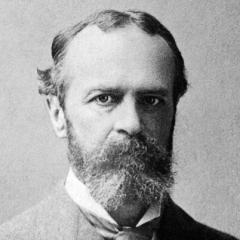
William James
William James, born on January 11, 1842, and died on August 26, 1910, was an influential American philosopher, psychologist, and writer. He is considered one of the founders of functionalism in psychology and has had a profound impact on the fields of psychology, philosophy, and religion. more
You May Also Like
Source: The Cruel Prince
Source: The Lies of Locke Lamora
Source: The Cruel Prince
“Ah! A lady of mystery! My very favorite kind.”
Source: The Cruel Prince
Source: Familiar Letters of John Adams & His Wife Abigail Adams, During the Revolution
“You’re like a story that hasn’t happened yet.”
Source: The Cruel Prince
Source: The Lost Sisters
Source: The Lost Sisters
Source: The Lost Sisters