Quotessence
Home / Quotes / Quote by Johann Wolfgang von Goethe

Quote by Johann Wolfgang von Goethe

Work

The Sorrows of Young Werther

The story follows Werther, a sensitive and idealistic young man, as he becomes deeply infatuated with a woman who is engaged to another. His emotional turmoil and eventual despair lead to tragic consequences. more

Author
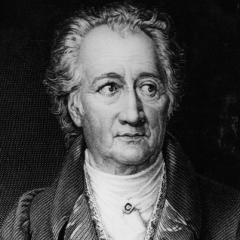
Johann Wolfgang von Goethe

Johann Wolfgang von Goethe, born on August 28, 1749, and died on March 22, 1832, was a prominent German writer, thinker, and scientist. He is one of the greatest writers in German literary history and his works have had a profound impact on the world. His most famous works include 'Faust' and 'The Sorrows of Young Werther'. more

You May Also Like

“It was heart-shaking. Glorious. Torches, dizziness, singing. Wolves howling around us and a bull bellowing in the dark. The river ran white. It was like a film in a fast motion, the moon waxing and waning, clouds rushing across the sky. Vines grew from the ground so fast they twined up the trees like snakes; seasons passing in the wink of an eye, entire years for all I know . . . . I mean we think of phenomenal change as being the very essence of time, when its's not at all. Time is something which defies spring and winder, birth and decay, the good and the bad, indifferently. Something changeless an joyous and absolutely indestructible. Duality ceases to exist; there is no ego, no "I," and yet its not at all like those horrid comparisons one sometimes hears in Eastern religions, the self being a drop of water swallowed by the ocean of the universe. It's more as if the universe expands to fill the boundaries of the self. You have no idea how pallid the workday boundaries of ordinary existence seem, after such and ecstasy. It was like being a baby. I could remember my name. The soles of my feet were cut to pieces and I couldn't even feel it.”

“Legion floats in darkness. Silence. It has been a long time since he knew such silence. As a child, he was taught to act in union with his two brothers. Their insane father insisted that he had only one child and refused to acknowledge more than one of them at a time. If more than one spoke, or made a fuss, or did anything to draw attention, or to threaten Father’s mad view of reality—one child, one child, ONE CHILD!—the repercussions were swift and painful. So the three children learned to act in concert. What one learned, the others did. When one was injured—as happened often, given Father’s extreme methods of teaching—the others hurt themselves to match. They had to match. They had to act as one. And eventually, madness being a most contagious disease, the three brothers genuinely believed themselves to be one.”