Quotessence
Home / Quotes / Quote by Min Jin Lee

Quote by Min Jin Lee

“Noa stared at her. She would always believe that he was someone else, that he wasn't himself but some fanciful idea of a foreign person; she would always feel like she was someone special because she had condescended to be with someone everyone else hated. His presence would prove to the world that she was a good person, an educated person, a liberal person. Noa didn't care about being Korean when he was with her; in fact, he didn't care about being Korean or Japanese with anyone. He wanted to be just himself, whatever that meant; he wanted to forget himself sometimes. But that wasn't possible. It would never be possible with her.”

Quote by Min Jin Lee

Work

Pachinko

Browse quotes and source details for this work. more

Author

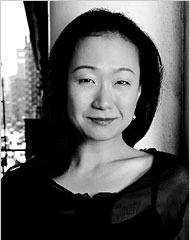
Min Jin Lee
Min Jin Lee

Min Jin Lee, born in 1968, is a talented writer known for her delicate emotions and profound insights into the lives of Asian immigrants and their descendants. Her debut novel, 'Pachinko', received widespread acclaim and won multiple literary awards. more

You May Also Like

“03:11 And in the past few years, we've been able to propagate this lie even further via social media. You may have seen images like this one: "The only disability in life is a bad attitude." Or this one: "Your excuse is invalid." Indeed. Or this one: "Before you quit, try!" These are just a couple of examples, but there are a lot of these images out there. You know, you might have seen the one, the little girl with no hands drawing a picture with a pencil held in her mouth. You might have seen a child running on carbon fiber prosthetic legs. And these images, there are lots of them out there, they are what we call inspiration porn. (Laughter) And I use the term porn deliberately, because they objectify one group of people for the benefit of another group of people. So in this case, we're objectifying disabled people for the benefit of nondisabled people. The purpose of these images is to inspire you, to motivate you, so that we can look at them and think, "Well, however bad my life is, it could be worse. I could be that person." But what if you are that person?”

“The issue of false consciousness is a genuinely difficult problem that has no definite solution. We should not approve of an unequal and brutal society because surveys show that people are happy. But who has the right to tell those oppressed women or starving landless peasants that they shouldn’t be happy, if they think they are? Does anyone have the right to make those people feel miserable by telling them the ‘truth’? There are no easy answers to these questions, but they definitely tell us that we cannot rely on ‘subjective’ happiness surveys to decide how well people are doing.”

“I don't want them to think that we dress like savages,' she replied, with a scorn that Pocahontas might have resented; and he was struck again by the religious reverence of even the most unworldly American women for the social advantages of dress. 'It's their armour,' he thought, 'their defence against the unknown, and their defiance of it.' And he understood for the first time the earnestness with which May, who was incapable of tying a ribbon in her hair to charm him, had gone through the solemn rite of selecting and ordering her extensive wardrobe.”