Quotessence
Home / Quotes / Quote by Nelson Mandela

Quote by Nelson Mandela

“When you are young and strong...you can stay alive on your hatred"....but realized later "They can take everything from me except my mind and heart" Nelson Mandela from Long Walk to Freedom”

Quote by Nelson Mandela

Work

Long Walk To Freedom

This book is an autobiography that chronicles the personal journey of a significant individual, covering their experiences, challenges, and achievements throughout their life. more
Author

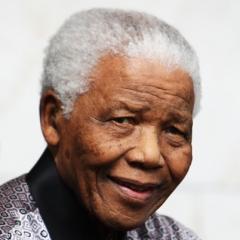
Nelson Mandela
Nelson Mandela

Nelson Mandela, the former President of South Africa, was born on July 18, 1918, and passed away on December 5, 2013. He was a leader in the anti-apartheid movement in South Africa and was imprisoned for 27 years for his opposition to apartheid policies. Mandela dedicated himself to promoting democracy and equality in South Africa, becoming a symbol of anti-racism and peace worldwide. more

You May Also Like

“His day is done. Is done. The news came on the wings of a wind, reluctant to carry its burden. Nelson Mandela’s day is done. The news, expected and still unwelcome, reached us in the United States, and suddenly our world became somber. Our skies were leadened. His day is done. We see you, South African people standing speechless at the slamming of that final door through which no traveller returns. Our spirits reach out to you Bantu, Zulu, Xhosa, Boer. We think of you and your son of Africa, your father, your one more wonder of the world. We send our souls to you as you reflect upon your David armed with a mere stone, facing down the mighty Goliath. Your man of strength, Gideon, emerging triumphant. Although born into the brutal embrace of Apartheid, scarred by the savage atmosphere of racism, unjustly imprisoned in the bloody maws of South African dungeons. Would the man survive? Could the man survive? His answer strengthened men and women around the world. In the Alamo, in San Antonio, Texas, on the Golden Gate Bridge in San Francisco, in Chicago’s Loop, in New Orleans Mardi Gras, in New York City’s Times Square, we watched as the hope of Africa sprang through the prison’s doors. His stupendous heart intact, his gargantuan will hale and hearty. He had not been crippled by brutes, nor was his passion for the rights of human beings diminished by twenty-seven years of imprisonment. Even here in America, we felt the cool, refreshing breeze of freedom. When Nelson Mandela took the seat of Presidency in his country where formerly he was not even allowed to vote we were enlarged by tears of pride, as we saw Nelson Mandela’s former prison guards invited, courteously, by him to watch from the front rows his inauguration. We saw him accept the world’s award in Norway with the grace and gratitude of the Solon in Ancient Roman Courts, and the confidence of African Chiefs from ancient royal stools. No sun outlasts its sunset, but it will rise again and bring the dawn. Yes, Mandela’s day is done, yet we, his inheritors, will open the gates wider for reconciliation, and we will respond generously to the cries of Blacks and Whites, Asians, Hispanics, the poor who live piteously on the floor of our planet. He has offered us understanding. We will not withhold forgiveness even from those who do not ask. Nelson Mandela’s day is done, we confess it in tearful voices, yet we lift our own to say thank you. Thank you our Gideon, thank you our David, our great courageous man. We will not forget you, we will not dishonor you, we will remember and be glad that you lived among us, that you taught us, and that you loved us all.”

“Mandela alikuwa hodari ndiyo maana akapelekwa jela. Alikuwa mvumilivu ndiyo maana akakaa jela kwa miaka ishirini na saba. Alivyotoka akawa kiongozi bora wa Afrika Kusini. Utu ukafanya awasamehe binadamu wenzake. Urithi wa Nelson Mandela kwetu ni uhodari, uvumilivu, uongozi bora, utu na msamaha kwa binadamu wenzetu. Mandela alikuwa baba kwa familia yake. Kwa Afrika Kusini alikuwa mlezi wa ndoto, ya amani na uhuru.”

“I remember that a Korak once brought to me an old tattered fashion-plate from "Frank Leslie's Illustrated Newspaper," containing three or four full-length figures of imaginary ladies, in the widest expansion of crinoline which fashion at that time prescribed. The poor Korak said he had often wondered what those curious objects could be; and now, as I was an American, perhaps I could tell him. He evidently had not the most remote suspicion that they were intended to represent human beings. I told him that those curious objects, as he called them, were American women. He burst out into a "tyee-e-e-e" of amazement, and asked with a wondering look, "Are all the women in your country as big as that at the bottom?" It was a severe reflection upon our ladies' dress, and I did not venture to tell him that the bigness was artificial, but merely replied sadly that they were.”