Quotessence
Home / Quotes / Quote by Ruth Benedict

Quote by Ruth Benedict

“The life history of the individual is first and foremost an accomodation to the patterns and standards traditionally handed in his community. From the moment of his birth the customs into which he is born shape his experience and behavior.”

Quote by Ruth Benedict

Work

PATTERNS OF CULTURE

This book delves into the intricate patterns that shape cultural norms, traditions, and social structures across various societies. It examines the ways in which culture influences behavior, thought, and interaction, providing a comprehensive look at the multifaceted nature of human cultural expression. more

Author

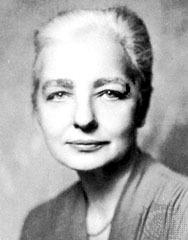
Ruth Benedict
Ruth Benedict

American anthropologist known for her contributions to cultural anthropology and social anthropology. Benedict focused on the differences between cultures and how these differences affect human behavior and social structures. more

You May Also Like

“When we recount our own tales we focus on the features that to us loom large and omit the ones that to us seem irrelevant. Studies show that it is likely that we do this early on, when we first give linguistic shape to our narrative, such that over time we don’t even see ourselves as exaggerating or minimizing.”

“I am alive, I have my own children and with them I have tried to achieve only one aim: that they shouldn’t be afraid of their father. They aren’t. I know that. When I enter a room, they don’t cringe, they don't look down at the floor, they don’t dart off as soon as they glimpse an opportunity, no, if they look at me, it is not a look of indifference, and if there is anyone I am happy to be ignored by it is them. If there is anyone I am happy to be taken for granted by, it is them. And should they have completely forgotten I was there when they turn forty themselves, I will thank them and take a bow and accept the bouquets.”

“Was it Jesus you saw a picture of?” he says and looks up at me. If it had not been for the friendly voice and the long pause before the question, I would have thought he was making fun of me. He finds it a little embarrassing that I am a Christian; all he wants is for me not to be different from the other kids, and of all the kids in the neighbourhood, his youngest son is the only one to call himself a Christian. But he is really wondering about this. I feel a flutter of joy because he actually cares, and at the same time I become a bit offended that he underestimates me like that. I shake my head. “It wasn’t Jesus,” I say.”

“But the moment I was alone others meant nothing to me. It wasn't that I disliked them, or nurtured feelings of loathing for them; on the contrary, I liked most of them, and the ones I didn't actually like I could always see some worth in, some attribute I could identify with, or at least find interesting, something which could occupy my mind for the moment. But liking them was not the same as caring about them. It was the social situation that bound me, the people within it did not.”