Quotessence
Home / Quotes / Quote by Jared Taylor

Quote by Jared Taylor

“Many laws passed by Congress have grandiose names and are hailed by their sponsors as far more important than they really are. In one case, however, legislators promised little of consequence for a law that reshaped the country. The Hart-Celler Act of 1965, also known as the Immigration and Nationality Act, abolished the national-origins immigration quotas set up in 1924 to preserve the European character of the American population. As we saw in the previous chapter, the promoters of the act insisted it would have little effect on the ethnic mix of the country, which was then nearly 90 percent white. By 2008, however, whites had already fallen to 65 percent of the population, and the Census Bureau was predicting they would become a minority in 2042—just 77 years after enactment. This would be a more dramatic long-term effect than perhaps that of any other legislation passed in the 20th century. Post-Hart-Celler immigration has also enormously increased the population of the United States, which is the only industrial nation that is growing like a developing country. In 2010, the population was expanding by about 7,500 people every day—nearly three million a year—and immigrants and their children accounted for 75 percent of the 27.3 million increase from 2000 to 2010. Growth at this rate requires enormous amounts of new infrastructure, including about 8,000 new schools every ten years. In 2008, the Census Bureau projected that the population would expand from 302 million to 439 million by 2050, assuming immigration continues at current rates. If immigration stopped after 2009, there would be much more moderate growth, with the population reaching 345 million rather than 439 million.”

Quote by Jared Taylor

Work

White Identity: Racial Consciousness in the 21st Century

Browse quotes and source details for this work. more

Author
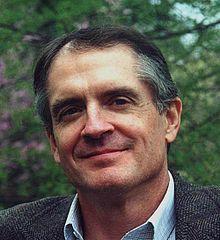
Jared Taylor
Jared Taylor

Jared Taylor, born on September 15, 1951, is an American journalist known for his views on racism and immigration issues. He was the editor of 'American Renaissance' magazine and has contributed articles to various publications, including 'The American Conservative' and 'The New American'. more

You May Also Like

“Many theories have been advanced to explain racial gaps in performance, of which these are the most common: black and Hispanic schools do not get enough money, their classes are too big, students are segregated from whites, minorities do not have enough teachers of their own race. Each of these explanations has been thoroughly investigated. Urban schools, where non-whites are concentrated, often get more money than suburban white schools, so blacks and Hispanics are not short-changed in budget or class size. Teacher race has no detectable effect on learning (Asians, for example, outperform whites regardless of who teaches them), nor do whites in the classroom raise or lower the scores of students of other races. Money is not the problem. From the early 1970s to the 2006-2007 school year per-pupil spending more than doubled in real terms. The Cato Institute calculates that when capital costs are included, the Los Angeles School District spends more than $25,000 per student per year, and the District of Columbia spends more than $28,000. Neither district gets good results. Demographic change can become a vicious cycle: As more minorities and immigrants enter a school system average achievement falls. More money and effort is devoted to these groups, squeezing gifted programs, music and art, and advanced placement courses. The better-performing students leave, and standards fall further.”

“As whites cease to be the mainstream, their interests become less important. In 2008, the College Board, the New York-based non profit that administers Advanced Placement (AP) tests, announced it was dropping AP courses and exams in Italian, Latin literature, and French literature. Blacks and Hispanics are not interested in those subjects, and they were the groups the College Board wanted to reach. In Berkeley, California, the governance council for the school district came up with a novel plan for bridging the racial achievement gap: eliminate all science labs, fire the five teachers who run them, and spend the money on “underperforming” students. The council explained that science labs were used mainly by white students, so they were a natural target for cuts. Many schools have slashed enriched programs for gifted students because so few blacks and Hispanics qualify for them. Evanston Township High School in Illinois prides itself on diversity and academic excellence but, like so many others, is dismayed that the two do not always go together. In 2010 it eliminated its elite freshman honors courses in English because hardly any blacks or Hispanics met the admission criteria. The honors biology course was scheduled for elimination the next year.”

“[M]any whites flee from diversity, but a few welcome it. Joe and Jessica Sweeney of Peoria, Illinois, had been sending their children to private school but decided the multi-racial experience of public school would be valuable. After the switch, their eight-year-old son and nine-year-old daughter were taunted with racial slurs, and became withdrawn. One day, a black student threatened to kill the girl with a box cutter. The same day, the boy showed his parents a large bruise he got when he was knocked down and called “stupid white boy.” The school reacted with indifference. The Sweeneys sent their children back to private school.” Fourteen-year-old James Tokarski was one of a handful of whites attending Bailly Middle School in Gary, Indiana, in 2006. Black students called him “whitey” and “white trash” and repeatedly beat him up. They knocked him unconscious twice. The school offered James a “lunch buddy,” to be with him whenever he was not in class, but his parents took him out of Bailly. The mother of another white student said it was typical for whites to be called “whitey” or “white boy,” and to get passes to eat lunch in the library rather than face hostile blacks in the lunch room. On Cleveland’s West Side, ever since court-ordered busing began in the 1970s, blacks and Hispanics have celebrated May Day by attacking whites. In 2003, Elsie Morales, a Puerto Rican mother of two, told reporters that when she took part in May Day violence as a student in the 1970s she justified it as payback for white oppression. Her daughter Jasmine said it was still common to attack whites: “It’s like if you don’t jump this person with us, you’re a wimp and we’ll get you next.” In the late 1990s, whites were 41 percent of students in Seattle public schools, blacks were 23, and the rest were Hispanic and Asian. In 1995 and 1999, schools conducted confidential surveys about racial harassment. In both years, a considerably larger percentage of white than black students complained of racial taunts or violence. Only an “alternative” newspaper reported the findings, and school representatives refused to discuss them.”

“For as long as statistics have been kept, blacks have had higher crime rates than whites. Containing crime is one of the top priorities of any society, so it is perplexing that the United States has added to its crime problem through immigration. Hispanics, who have been by far the most numerous post-1965 immigrant group, commit crimes at rates lower than blacks but higher than whites. Some people claim that all population groups commit crimes at the same rates, and that racial differences in incarceration rates reflect police and justice system bias. This view is wrong. The US Department of Justice carefully tracks murder, which is the violent crime for which racial data on victim and perpetrator are most complete. In 2005, the department noted that blacks were six times more likely than whites to be victims of murder and seven times more likely to commit murder. There are similar differences for other crimes. The United States regularly conducts a huge, 100,000-person crime study known as the National Crime Victimization Survey (NCVS), in which Americans are asked to describe the crimes of which they have been victim during the year, and to indicate race of perpetrator. NCVS figures are therefore a reliable indication of the racial distribution of violent criminals. The National Incident-Based Reporting System (NIBRS) is another huge database that records the races of all suspects reported to the police as well as those arrested by police. Both these data sets prove that blacks commit a vastly disproportionate amount of violent crime. In fact, blacks are arrested less frequently than would be expected from reports by crime victims of the race of perpetrator. Racial differences in arrest rates reflect racial differences in crime rates, not police bias. Justice Department figures show that blacks commit crimes and are incarcerated at roughly 7.2 times the white rate, and Hispanics at 2.9 times the white rate. (Asians are the least crime-prone group in America, and are incarcerated at only 22 percent of the white rate.) Robbery or “mugging” shows the greatest disparities, with blacks offending at 15 times and Hispanics at just over four times the white rate. There are practically no crimes blacks and Hispanics do not commit at higher rates than whites, whether it is larceny, car theft, drug offenses, burglary, rape, or alcohol offenses. Even for white collar crimes—fraud, racketeering, bribery/conflict of interest, embezzlement—blacks are incarcerated at three to five times the white rate, and Hispanics at about twice the white rate. Racial differences in crime rates are such an embarrassment they can interfere with law enforcement. In 2010 the Greater Cleveland Regional Transit Authority had a problem with scores of young people openly beating fares—which cuts into revenue and demoralizes other riders. It considered a crackdown, but decided against it. The scoff-laws were overwhelmingly black, and the transit authority did not have the stomach to take any action that would fall heavily on minorities.”

“At its worst, crime turns parts of our country into what one journalist calls “budding Mogadishus,” named after the capital of Somalia where, for years, there has been no government: 'L.A.’s hot zones are tiny, intensely dangerous areas where nothing works, where law has broken down and mainstream institutions simply fail. Places where mail carriers and meter readers balk when the bullets fly. Where paramedics and firefighters are hesitant to enter because of the crossfire. Where police officers go in only heavily reinforced or with helicopters . . . .' Race is part of it. According to one calculation of homicide victimization rates for men, ages 15 to 29, Hispanics in Los Angeles are killed at seven times the white rate and blacks at 21 times the white rate. Hardly any are killed by whites. Calling these places “Mogadishus” may be an insult to the Somalis. When CNN compiled a list of the ten most dangerous cities in the world in 2010, Mogadishu was not on it. Detroit and New Orleans were—in third and fourth places, after Baghdad and Caracas and ahead of Kinshasa and Beirut.”

“Under the headline, “Bribe Culture Seeps Into South Texas,” the Houston Chronicle described how payoffs have become common, everywhere from school districts to building inspections to municipal courts. The bribe—la mordida—as a way of life is moving north. Anthony Knopp, who teaches border history at the University of Texas at Brownsville, said that as America becomes more Hispanic, “corruption will show up here, naturally.” The same thing is happening in California. Small towns south of Los Angeles, such as South Gate, Lynwood, Bell Gardens, Maywood, Huntington Park, and Vernon were once white suburbs but have become largely Hispanic. They have also become notorious for thieving, bribe-taking politicians. Mayors, city council members, and treasurers have paraded off to jail. “When new groups come to power, and become entrenched … then they tend to rule it as a fiefdom,” explained Jaime Regalado, of California State University, Los Angeles. Maywood, which was 96 percent Hispanic by 2010, was so badly run it lost insurance coverage and had to lay off all its employees. The California Joint Powers Insurance Authority (JPIA), composed of more than 120 cities and other public agencies to share insurance costs, declared the Maywood government too risky to insure. It was the first time in its 32-year history that the JPIA had ever terminated a member. It has been reported that black elected officials are 5.3 times more likely to be arrested for crimes than white elected officials. Comparative arrest figures for Hispanic officials are not available. Hispanics may be especially susceptible to corruption if they work along the US-Mexico border. There are no comprehensive data on this problem, but incidents reported in just one year —2005 are disturbing. Operation Lively Green was an FBI drug smuggling sting that led to 33 guilty pleas. Twenty-four of the guilty were Hispanic and most of the rest were black. All were police officers, port inspectors, prison guards, or soldiers. They waved drug shipments through ports, prevented seizures by the Border Patrol, and sold fake citizenship documents.”

“Runaway costs are crushing the American medical system. Hispanics are the group least likely to have medical insurance, with 30.7 percent uninsured. Ten point eight percent of whites and 19.1 percent of blacks are without insurance. Illegal immigrants rarely have insurance, but hospitals cannot turn them away. In 1985, Congress passed the Emergency Medical Treatment and Active Labor Act, which requires hospitals to treat all emergency patients, without regard to legal status or ability to pay. Anyone who can stagger within 250 yards of a hospital—a distance established through litigation—is entitled to “emergency care,” which is defined so broadly that hospital emergency rooms have become free clinics. Emergency-room care is the most expensive kind. Childbirth is an emergency, and hospitals must keep mother and child until both can be discharged. If the mother is indigent the hospital pays for treatment, even if there are expensive complications. Any child born in the United States is considered a US citizen, so thousands of indigent illegal immigrants make a point of having “anchor babies” at public expense. The new American qualifies for all forms of welfare, and at age 21 can sponsor his parents for American citizenship. In 2006 in California, an estimated 100,000 illegal immigrant mothers had babies at public expense, and accounted for about one in five births. The costs were estimated at $400 million per year, and in the state as a whole, half of all Medi-Cal (state welfare) births were to illegal immigrant mothers. In 2003, 70 percent of the babies born in San Joaquin General Hospital in Stockton were anchor babies. In Los Angeles and other cities with heavy gang activity, hospitals must deal with “dump and run” patients—criminals wounded in shootouts who are rolled out of speeding cars by fellow gang members. Illegal-immigrant patients often show up without papers of any kind, and doctors have no idea whom they are treating. Mexican hospitals routinely turn away uninsured Mexicans, and if the US border is not far, may tell the ambulance driver to head for the nearest American hospital. “It’s a phenomenon we noticed some time ago, one that has expanded very rapidly,” said a federal law enforcement officer.”

“Hospitals cannot continue to hemorrhage. For the country as a whole, medical insurance premiums include a surcharge that pays for treating the uninsured. However, if the proportion of uninsured indigent patients exceeds a certain figure, a hospital has no choice but to close. In California alone, the heavy cost of free medicine for foreigners forced no fewer than 60 hospitals to shut down between 1993 and 2003; many others were on the verge of collapse. From 1994 to 2004, the number of hospital emergency rooms in the country as a whole dropped by more than 12 percent. In May 2010, Miami’s health care system was so strapped, it was considering closing two of its five public hospitals. This would mean laying off 4,487 employees and the loss of 581 acute-care beds. Experts explained that treating uninsured patients had stretched the system to the breaking point. Houston is a good example of a city whose hospitals are barely making ends meet. In the nation as a whole, about 15 percent of the population has no medical insurance, but Texas, with its large population of Hispanics, has the highest percentage at 24 percent. In Houston, the figure is 30 percent. The safety net cannot accommodate so many people who cannot pay. “Does this mean rationing?” asks Kenenth Mattox, chief of staff at Ben Taub General Hospital. “You bet it does.” There is such a crush at Houston’s emergency rooms that ambulances often wait for one or two hours before they can even unload patients. The record wait is six hours. Twenty percent of the time, hospitals end up sending patients to other hospitals, and some have died after being diverted. Politicians and businessmen pull strings so friends can cut in line. Americans who fall sick in Mexico do not get free treatment. The State Department warns that Mexican doctors routinely refuse to treat foreign patients unless paid in advance, and that they often charge Americans for services not rendered.”

“Crews that fight forest fires in Oregon are now so heavily Hispanic that in 2003, the Oregon Department of Forestry required that crew chiefs be bilingual. In 2006, the department started forcing out veterans. Jaime Pickering, who used to run a squad of 20 firefighters, says the rule means “job losses for Americans—the white people.” Zita Wilensky, a 16-year veteran, was the only white employee of Miami-Dade County Domestic Violence Unit. Her co-workers made fun of her and called her gringa and Americana. Miss Wilensky says her boss gave her 60 days to learn Spanish, and fired her when she failed to do so. It is increasingly common, therefore, for Americans to be penalized because they cannot speak Spanish, but employers who insist that workers speak English are guilty of discrimination. In 2001, the Equal Employment Opportunity Commission forced a small Catholic college in San Antonio to pay $2.4 million to housekeepers who were required to speak English at work. There are now about 45 million Hispanics in the country. What will the status of Spanish be when there are 130 million Hispanics, as the Census Bureau projects for 2050? In 2000, President Bill Clinton decided that the prohibition against discrimination because of “national origin” in the Civil Rights Act of 1964 meant that if a foreigner cannot speak to a government agency in his own language he is a victim. Executive Order 13166 required all local governments that receive federal money (all of them, essentially) to translate official documents into any language spoken by at least 3,000 people in the area or 10 percent of the local population. It also required interpreters for non-English speakers. In 2002, the Office of Management and Budget estimated that hospitals alone would spend $268 million every year implementing Executive Order 13166, and state departments of motor vehicles would spend $8.5 million. OMB estimated that communicating with food stamp recipients who don’t speak English would cost $25.2 million per year.”