Quotessence
Home / Quotes / Quote by Jared Taylor

Quote by Jared Taylor

“Runaway costs are crushing the American medical system. Hispanics are the group least likely to have medical insurance, with 30.7 percent uninsured. Ten point eight percent of whites and 19.1 percent of blacks are without insurance. Illegal immigrants rarely have insurance, but hospitals cannot turn them away. In 1985, Congress passed the Emergency Medical Treatment and Active Labor Act, which requires hospitals to treat all emergency patients, without regard to legal status or ability to pay. Anyone who can stagger within 250 yards of a hospital—a distance established through litigation—is entitled to “emergency care,” which is defined so broadly that hospital emergency rooms have become free clinics. Emergency-room care is the most expensive kind. Childbirth is an emergency, and hospitals must keep mother and child until both can be discharged. If the mother is indigent the hospital pays for treatment, even if there are expensive complications. Any child born in the United States is considered a US citizen, so thousands of indigent illegal immigrants make a point of having “anchor babies” at public expense. The new American qualifies for all forms of welfare, and at age 21 can sponsor his parents for American citizenship. In 2006 in California, an estimated 100,000 illegal immigrant mothers had babies at public expense, and accounted for about one in five births. The costs were estimated at $400 million per year, and in the state as a whole, half of all Medi-Cal (state welfare) births were to illegal immigrant mothers. In 2003, 70 percent of the babies born in San Joaquin General Hospital in Stockton were anchor babies. In Los Angeles and other cities with heavy gang activity, hospitals must deal with “dump and run” patients—criminals wounded in shootouts who are rolled out of speeding cars by fellow gang members. Illegal-immigrant patients often show up without papers of any kind, and doctors have no idea whom they are treating. Mexican hospitals routinely turn away uninsured Mexicans, and if the US border is not far, may tell the ambulance driver to head for the nearest American hospital. “It’s a phenomenon we noticed some time ago, one that has expanded very rapidly,” said a federal law enforcement officer.”

Quote by Jared Taylor

Work

White Identity: Racial Consciousness in the 21st Century

Browse quotes and source details for this work. more

Author
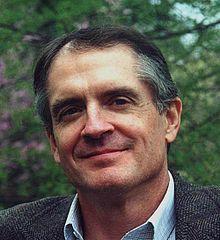
Jared Taylor
Jared Taylor

Jared Taylor, born on September 15, 1951, is an American journalist known for his views on racism and immigration issues. He was the editor of 'American Renaissance' magazine and has contributed articles to various publications, including 'The American Conservative' and 'The New American'. more

You May Also Like

“Hospitals cannot continue to hemorrhage. For the country as a whole, medical insurance premiums include a surcharge that pays for treating the uninsured. However, if the proportion of uninsured indigent patients exceeds a certain figure, a hospital has no choice but to close. In California alone, the heavy cost of free medicine for foreigners forced no fewer than 60 hospitals to shut down between 1993 and 2003; many others were on the verge of collapse. From 1994 to 2004, the number of hospital emergency rooms in the country as a whole dropped by more than 12 percent. In May 2010, Miami’s health care system was so strapped, it was considering closing two of its five public hospitals. This would mean laying off 4,487 employees and the loss of 581 acute-care beds. Experts explained that treating uninsured patients had stretched the system to the breaking point. Houston is a good example of a city whose hospitals are barely making ends meet. In the nation as a whole, about 15 percent of the population has no medical insurance, but Texas, with its large population of Hispanics, has the highest percentage at 24 percent. In Houston, the figure is 30 percent. The safety net cannot accommodate so many people who cannot pay. “Does this mean rationing?” asks Kenenth Mattox, chief of staff at Ben Taub General Hospital. “You bet it does.” There is such a crush at Houston’s emergency rooms that ambulances often wait for one or two hours before they can even unload patients. The record wait is six hours. Twenty percent of the time, hospitals end up sending patients to other hospitals, and some have died after being diverted. Politicians and businessmen pull strings so friends can cut in line. Americans who fall sick in Mexico do not get free treatment. The State Department warns that Mexican doctors routinely refuse to treat foreign patients unless paid in advance, and that they often charge Americans for services not rendered.”

“Crews that fight forest fires in Oregon are now so heavily Hispanic that in 2003, the Oregon Department of Forestry required that crew chiefs be bilingual. In 2006, the department started forcing out veterans. Jaime Pickering, who used to run a squad of 20 firefighters, says the rule means “job losses for Americans—the white people.” Zita Wilensky, a 16-year veteran, was the only white employee of Miami-Dade County Domestic Violence Unit. Her co-workers made fun of her and called her gringa and Americana. Miss Wilensky says her boss gave her 60 days to learn Spanish, and fired her when she failed to do so. It is increasingly common, therefore, for Americans to be penalized because they cannot speak Spanish, but employers who insist that workers speak English are guilty of discrimination. In 2001, the Equal Employment Opportunity Commission forced a small Catholic college in San Antonio to pay $2.4 million to housekeepers who were required to speak English at work. There are now about 45 million Hispanics in the country. What will the status of Spanish be when there are 130 million Hispanics, as the Census Bureau projects for 2050? In 2000, President Bill Clinton decided that the prohibition against discrimination because of “national origin” in the Civil Rights Act of 1964 meant that if a foreigner cannot speak to a government agency in his own language he is a victim. Executive Order 13166 required all local governments that receive federal money (all of them, essentially) to translate official documents into any language spoken by at least 3,000 people in the area or 10 percent of the local population. It also required interpreters for non-English speakers. In 2002, the Office of Management and Budget estimated that hospitals alone would spend $268 million every year implementing Executive Order 13166, and state departments of motor vehicles would spend $8.5 million. OMB estimated that communicating with food stamp recipients who don’t speak English would cost $25.2 million per year.”

“Different groups have different priorities. Because Hispanics tend to have low incomes, they support increases in government services, even at the cost of more taxes for others. Most Hispanics supported all five spending initiatives on the May, 2005 California ballot; most whites opposed all five. Prof. Nikolai Roussanov of the Wharton School has found that both blacks and Hispanics spend 50 percent less on medical care than do whites with similar incomes, and that blacks and Hispanics spend 16 percent and 30 percent less, respectively, on education than do whites with similar incomes. Many studies have also found that blacks and Hispanics save less than whites for future goals like retirement. How do they spend their money? Blacks are more likely than whites to buy lottery tickets and to spend disproportionately more money doing so. Prof Roussanov says the biggest difference, however, is that blacks and Hispanics spend 30 percent more than whites with the same income on what he calls “visible goods” meant to convey status, such as clothing, cars, and jewelry. Different groups have different buying patterns. In 2004, Sears decided to turn 97 of its 870 locations into “multicultural stores,” in which clothing, signs, décor, and displays were geared to Hispanics and blacks, who do not have the same tastes and body sizes as whites. Hispanics want “stylish,” form-fitting clothing in bright, loud colors, and the highest heels available. Blacks need more “plus” sizes. In the multicultural stores, Sears displays the loud clothing prominently, near entrances. Clothing white women are likely to buy, such as the more traditional Land’s End line, is in the back. For years there was a Roy Rogers-Dale Evans Museum in Victorville, California, filled with Roy Rogers memorabilia and even his horse Trigger—stuffed, of course. That part of California is now heavily Hispanic, and no one is interested in Roy Rogers. The museum moved to Branson, Missouri, which has become a resort catering to bluegrass and country music fans, who are overwhelmingly white. Victorville immigrant Rosalina Sondoval-Marin did not miss the museum. “Roy Rogers? He doesn’t mean anything,” she said. “There’s a revolution going on, and it don’t include no Roy Rogers.”

“Clearly, our immigration policies should be reexamined. A convincing case can be made on environmental grounds alone that a nation of 300,000,000 needs no more people, especially since it would enjoy natural growth if the borders were closed tomorrow. How can we possibly claim to be fighting environmental degradation or hope for energy independence when we import a million or more people every year? How can we claim to be fighting poverty, crime, school failure, or disease when we import people who are more likely than natives to be poor, criminals, school failures, and to suffer from strange diseases? Immigration is even harder to justify when many newcomers speak no English, maintain foreign loyalties, or practice disconcerting religions. It is profoundly unwise to add yet more disparate elements to a population already divided by diversity. [D]emographers and economists are making dire projections based on the lower likelihood of blacks and Hispanics to become productive workers. These people go on to insist that the solution is to improve education for blacks and Hispanics, but the United States has already made enormous efforts to that end. There is no reason to think some kind of breakthrough is imminent. Clearly, the solution to the problems posed by an increasing Hispanic population is to stop Hispanic immigration. However, [...], our policy-makers are too afraid of accusations of racism to draw such an obvious conclusion. Americans must open their eyes to the fact that a changing population could change everything in America. The United States could come to resemble the developing world rather than Europe—in some places it already does. One recent book on immigration to Europe sounded a similar alarm when the author asked: “Can you have the same Europe with different people?” His answer was a forthright “no.” It should be clear from the changes that have already taken place in the United States that we cannot have the same America with different people, either. Different populations build different societies. The principles of European and European-derived societies—freedom of speech, the rule of law, respect for women, representative government, low levels of corruption—do not easily take root elsewhere. They were born out of centuries of struggle, false starts, and setbacks, and cannot be taken for granted. A poorer, more desperate America, one riven with racial rivalries, one increasingly populated by people who come from non-Western traditions could turn its back on those principles. Many people assert that all people can understand and assimilate Western thinking—and yet cultures are very different. Can you, the reader, imagine emigrating to Cambodia or Saudi Arabia or Tanzania and assimilating perfectly? Probably not; yet everyone in the world is thought to be a potential American. Even if there is only a small chance that non-Western immigrants will establish alien and unsettling practices, why take this risk? Immigration to the United States, like immigration to any nation, is a favor granted by citizens to foreigners. It is not a right. Immigration advocates often point to the objections Anglo-Americans made to turn-of-the-century immigrants from Italy, Ireland, Hungary, and other “non-Nordic” countries. They point out that these immigrants assimilated, and insist that Mexicans and Haitians will do the same. Those advocates overlook the fundamental importance of race. They forget that the United States already had two ill assimilated racial groups long before the arrival of European ethnics—blacks and American Indians—and that those groups are still uncomfortably distinct elements in American society. Different European groups assimilated across ethnic lines after a few generations because they were of the same race. There are many societal fault lines in “diverse” societies—language, religion, ethnicity—but the fault line of race is deepest.”

“Immigration is not a uniquely American problem. Aside from the former Communist countries, nearly every white country has accepted large numbers of immigrants, so there is a huge flow from non-white to white countries. There are two reasons for this. First, whites have built the most successful countries in the history of the world and others want to take part in that success. Second, only white countries permit large-scale immigration; others keep their territories exclusively for their own people. Different national views on immigration therefore parallel expressions of racial consciousness in the United States. Whites—the only people who dare not express racial pride—let in large numbers of immigrants who are changing their societies. Non-whites, who have a strong sense of racial consciousness, maintain their boundaries. No non-white nation praises diversity, nor do immigrants come to the West with the intention of sharing this gift with us. Most never heard of diversity before they came here. They come because their countries are unsuccessful. Once they are here, most probably want to live their lives essentially as they did before, but with a First-World rather than Third-World income. They want to keep their languages, religions, folkways, and loyalties rather than shed their foreign skins and become American.”

“Prosperous non-white nations such as Japan, Taiwan, and South Korea would be very desirable destinations for Third-World immigrants, and if those countries opened their borders, they would quickly be filled with foreigners. They keep their borders closed because they know they cannot have the same Japan or Taiwan with different people. Israel, likewise, is determined to remain a Jewish state because Israelis know they cannot have the same Israel with different people. In 2010, Prime Minister Benjamin Netanyahu approved tough measures to deport illegal immigrants, calling them a “threat to the character of the country.” Linguistically, culturally, and racially, Japan is homogeneous. This means Japanese never even think about a host of problems that torment Americans. Since Japan has only one race, no one worries about racism. There was no civil rights movement, no integration struggle, and no court-ordered busing. There is no bilingual education, and no affirmative action. There is no tyranny of “political correctness,” and no one is clamoring for a “multi-cultural curriculum.” When a company needs to hire someone, it doesn’t give a thought to “ethnic balance;” it just hires the best person. No Japanese are sent to reeducation seminars because of “insensitivity.” Japan has no Civil Rights Commission or Equal Employment Opportunity Commission. It has no Equal Housing Act or Voting Rights Act. No one worries about drawing up voting districts to make sure minorities are elected. There are no noisy ethnic groups trying to influence foreign policy. Japanese do not know what a “hate crime” would be. And they know that an American-style immigration policy would change everything. They want Japan to remain Japanese. This is a universal view among non-whites. Those countries that send the largest numbers of emigrants to the United States—Mexico, India, China—permit essentially no immigration at all. For them, their nations are exclusive homelands for their own people. Most people refuse to share their homelands. Robert Pape, a leading expert on suicide bombing, explains that its motive is almost always nationalism, not religious fanaticism. Whether in Sri Lanka, Lebanon, Chechnya, Kashmir, the West Bank, Iraq, or Afghanistan, its main objective is to drive out occupying aliens. It is only Western nations—and only within the last few decades—that have ever voluntarily accepted large-scale immigration that could reduce the inhabitants to a racial minority. What the United States and other European-derived nations are doing is without historical precedent.”

“Under the current rules of American society, whites have no moral grounds to preserve racial majorities in any context, whether in a club, neighborhood, school, region, the nation as a whole, or even in their own families. Somewhere, deep in their bones, whites yearn for the comfort, the ease, the joy of living among their own people in societies that reflect the values of their ancestors. They answer this yearning whenever they move from Southern California to the North, from the city to the suburbs, from diversity to homogeneity. But according to today’s racial dogma, this yearning is evil. There will always be “white Meccas,” enclaves for wealthy whites who can afford them, but with no moral, legal, or practical way to preserve majorities, most whites will eventually come to the end of the road. They will find that the America for which they yearn has disappeared. At what point would it be legitimate for whites to act in their own group interests? When they become a minority? When they are no more than 30 percent of the population? Ten percent? Or must they never be allowed to take any action to ensure that the land in which they live reflects their values, their culture, their manners, their traditions, and honors the achievements of their ancestors? If whites do not cherish and defend these things, no one else will do it for them. If whites do not rekindle some sense of their collective interests they will be pushed aside by people who have a very clear sense of their interests. Eventually, whites will come to understand that to dismantle and even demonize white racial consciousness while other races cultivate racial consciousness is a fatal form of unilateral disarmament. For their very survival as a distinct people with a distinct culture, whites must recognize something all others take for granted: that race is a fundamental part of individual and group identity. Any society based on the assumption that race can be wished or legislated away ensures for itself an endless agony of pretense, conflict, and failure. For 60 years, we have wished and legislated in vain. In so doing, by opening the United States to peoples from every corner of the world, we have created agonizing problems for future generations. As surely as the Communists were mistaken in their hopes of remaking human nature, so have been the proponents of diversity and multi-culturalism. What goals might whites pursue if they had a racial identity like that of other groups? Clearly, they would end immigration; it is not in the interests of whites to be displaced by others. They would also recognize that when whites prefer to live, work, and go to school with people of their own race, that is no different from anyone else wanting to do these things. Whites—and others—should have legal means to preserve local majorities if that is their preference. That preference should not be imposed on anyone who wishes to live in a more Bohemian manner, but it is wrong to condemn whites—and only whites—for instincts science suggests are part of human nature. Another goal of whites would be to end the current propaganda about the advantages of diversity, for it only justifies their dispossession. Whites should also be free—again, like all other groups—to express pride in the accomplishments of their people.”

“While whites were still the majority, they established preferences for blacks and Hispanics that took such deep root that Congress and state legislatures have been powerless to abolish them. These programs would provoke outrage if they were practiced in favor of whites, but they have been partially curbed only by state ballot initiatives and equivocal Supreme Court decisions. Demography would change this. In 2006, the state of Michigan voted to abolish racial preferences in college admissions and state contracting, but the measure passed only because whites were still a majority. Eighty-five percent of blacks and 69 percent of Hispanics voted to maintain racial preferences for themselves. When they have a voting majority nothing will prevent non-whites from reestablishing and extending preferences. Are there portents in the actions of Eric Holder, the first black attorney general, appointed by the first black president? J. Christian Adams, a white Justice Department lawyer resigned in protest when the department dropped a case of voter intimidation the previous administration had already won by default against the New Black Panther Party. In this 2008 case, fatigue-clad blacks waved billy clubs at white voters and yelled such things as “You are about to be ruled by the black man, cracker!” Mr. Adams called it “the simplest and most obvious violation of federal law I saw in my Justice Department career.” He believed the decision to dismiss the case reflected hostility to the rights of whites. He said some of his colleagues called selective prosecution “payback time,” adding that “citizens would be shocked to learn about the open and pervasive hostility within the Justice Department to bringing civil rights cases against nonwhite defendants on behalf of white victims.” Christopher Coates, who was the head of the voting section of the Civil Rights Division, agreed with this assessment. In sworn testimony before Congress, he called the dismissal of the Black Panthers case a “travesty of justice” and described a “hostile atmosphere” against “race-neutral enforcement” of the Voting Rights Act. He said the department had a “deep-seated opposition to the equal enforcement of the Voting Rights Act against racial minorities and for the protection of white voters who have been discriminated against.” How will the department behave when whites become a minority?”

“E. Raymond Hall, professor of biology at the University of Kansas, wrote the authoritative work on American wildlife, Mammals of North America. He stated as a biological law that, “two subspecies of the same species do not occur in the same geographic area.” Prof. Hall explains that human races are biological subspecies, and that the law applied to them, too: “To imagine one subspecies of man living together on equal terms for long with another subspecies is but wishful thinking and leads only to disaster and oblivion for one or the other.” In recent decades we have seen what Prof. Hall was writing about in the Balkans, Sudan, Rwanda, Burundi, and the Eastern Congo. We call it “ethnic cleansing.” In Zimbabwe there is a systematic effort to rid the country of whites, and some observers do not rule out similar efforts in South Africa and Namibia. Is it utterly unrealistic to imagine ethnic cleansing in the United States? Prof. Hall’s forebodings do not appear outlandish in some of our schools, prisons, and neighborhoods. The demographic forces we have set in motion have created conditions that are inherently unstable and potentially violent. All other groups are growing in numbers and have a vivid racial identity. Only whites have no racial identity, are constantly on the defensive, and constantly in retreat. They have a choice: regain a sense of identity and the resolve to maintain their numbers, their traditions, and their way of life—or face oblivion.”