Quotessence
Home / Quotes / Quote by Jared Taylor

Quote by Jared Taylor

“While whites were still the majority, they established preferences for blacks and Hispanics that took such deep root that Congress and state legislatures have been powerless to abolish them. These programs would provoke outrage if they were practiced in favor of whites, but they have been partially curbed only by state ballot initiatives and equivocal Supreme Court decisions. Demography would change this. In 2006, the state of Michigan voted to abolish racial preferences in college admissions and state contracting, but the measure passed only because whites were still a majority. Eighty-five percent of blacks and 69 percent of Hispanics voted to maintain racial preferences for themselves. When they have a voting majority nothing will prevent non-whites from reestablishing and extending preferences. Are there portents in the actions of Eric Holder, the first black attorney general, appointed by the first black president? J. Christian Adams, a white Justice Department lawyer resigned in protest when the department dropped a case of voter intimidation the previous administration had already won by default against the New Black Panther Party. In this 2008 case, fatigue-clad blacks waved billy clubs at white voters and yelled such things as “You are about to be ruled by the black man, cracker!” Mr. Adams called it “the simplest and most obvious violation of federal law I saw in my Justice Department career.” He believed the decision to dismiss the case reflected hostility to the rights of whites. He said some of his colleagues called selective prosecution “payback time,” adding that “citizens would be shocked to learn about the open and pervasive hostility within the Justice Department to bringing civil rights cases against nonwhite defendants on behalf of white victims.” Christopher Coates, who was the head of the voting section of the Civil Rights Division, agreed with this assessment. In sworn testimony before Congress, he called the dismissal of the Black Panthers case a “travesty of justice” and described a “hostile atmosphere” against “race-neutral enforcement” of the Voting Rights Act. He said the department had a “deep-seated opposition to the equal enforcement of the Voting Rights Act against racial minorities and for the protection of white voters who have been discriminated against.” How will the department behave when whites become a minority?”

Quote by Jared Taylor

Work

White Identity: Racial Consciousness in the 21st Century

Browse quotes and source details for this work. more

Author
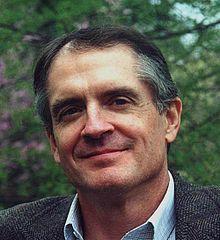
Jared Taylor
Jared Taylor

Jared Taylor, born on September 15, 1951, is an American journalist known for his views on racism and immigration issues. He was the editor of 'American Renaissance' magazine and has contributed articles to various publications, including 'The American Conservative' and 'The New American'. more

You May Also Like

“E. Raymond Hall, professor of biology at the University of Kansas, wrote the authoritative work on American wildlife, Mammals of North America. He stated as a biological law that, “two subspecies of the same species do not occur in the same geographic area.” Prof. Hall explains that human races are biological subspecies, and that the law applied to them, too: “To imagine one subspecies of man living together on equal terms for long with another subspecies is but wishful thinking and leads only to disaster and oblivion for one or the other.” In recent decades we have seen what Prof. Hall was writing about in the Balkans, Sudan, Rwanda, Burundi, and the Eastern Congo. We call it “ethnic cleansing.” In Zimbabwe there is a systematic effort to rid the country of whites, and some observers do not rule out similar efforts in South Africa and Namibia. Is it utterly unrealistic to imagine ethnic cleansing in the United States? Prof. Hall’s forebodings do not appear outlandish in some of our schools, prisons, and neighborhoods. The demographic forces we have set in motion have created conditions that are inherently unstable and potentially violent. All other groups are growing in numbers and have a vivid racial identity. Only whites have no racial identity, are constantly on the defensive, and constantly in retreat. They have a choice: regain a sense of identity and the resolve to maintain their numbers, their traditions, and their way of life—or face oblivion.”

“The modern world is the opposite of the aspiration expressed in Doctor Martin Luther King's 'I Have A Dream' speech. In that speech, Doctor King stated his ideal vision of a future where his children would be judged not 'by the color of their skin but by the content of their character.' There is an even-greater obsession with race today and the external packaging we come in. Content of character is secondary, if not completely irrelevant.”

“I believe in the radical equality of all human beings. No human is of greater or lesser value than anyone else. The word “radical” has in its beginnings the word “root,” meaning what is foundational. I believe the commitment to radical equality is the root, or foundation, of inclusive meeting practices and fair facilitation.”

“Even if there is no connection between diversity and international influence, some people would argue that immigration brings cultural enrichment. This may seem to be an attractive argument, but the culture of Americans remains almost completely untouched by millions of Hispanic and Asian immigrants. They may have heard of Cinco de Mayo or Chinese New Year, but unless they have lived abroad or have studied foreign affairs, the white inhabitants of Los Angeles are likely to have only the most superficial knowledge of Mexico or China despite the presence of many foreigners. Nor is it immigrants who introduce us to Cervantes, Puccini, Alexander Dumas, or Octavio Paz. Real high culture crosses borders by itself, not in the back pockets of tomato pickers, refugees, or even the most accomplished immigrants. What has Yo-Yo Ma taught Americans about China? What have we learned from Seiji Ozawa or Ichiro about Japan? Immigration and the transmission of culture are hardly the same thing. Nearly every good-sized American city has an opera company, but that does not require Italian immigrants. Miami is now nearly 70 percent Hispanic, but what, in the way of authentic culture enrichment, has this brought the city? Are the art galleries, concerts, museums, and literature of Los Angeles improved by diversity? Has the culture of Detroit benefited from a majority-black population? If immigration and diversity bring cultural enrichment, why do whites move out of those very parts of the country that are being “enriched”? It is true that Latin American immigration has inspired more American school children to study Spanish, but fewer now study French, German, or Latin. If anything, Hispanic immigration reduces what little linguistic diversity is to be found among native-born Americans. [...] [M]any people study Spanish, not because they love Hispanic culture or Spanish literature but for fear they may not be able to work in America unless they speak the language of Mexico. Another argument in favor of diversity is that it is good for people—especially young people —to come into contact with people unlike themselves because they will come to understand and appreciate each other. Stereotyped and uncomplimentary views about other races or cultures are supposed to crumble upon contact. This, of course, is just another version of the “contact theory” that was supposed to justify school integration. Do ex-cons and the graduates—and numerous dropouts—of Los Angeles high schools come away with a deep appreciation of people of other races? More than half a century ago, George Orwell noted that: 'During the war of 1914-18 the English working class were in contact with foreigners to an extent that is rarely possible. The sole result was that they brought back a hatred of all Europeans, except the Germans, whose courage they admired.”