Quotessence
Home / Quotes / Quote by John Green

Quote by John Green

“This is your war now.' I despised myself for the cheesy sentiment, but what else did I have? 'Some war,' he said dismissively. 'What am I at war with? My cancer. And what is my cancer? My cancer is me. The tumors are made of me. They're made of me as surely as my brain and my heart are made of me. It is a civil war, Hazel Graze, with a predetermined winner.”

Quote by John Green

Work

The Fault in Our Stars

This novel delves into the profound relationship between two teenagers, Hazel and Gus, who share a rare cancer diagnosis. Their journey is marked by humor, heartache, and the search for meaning in a world that often seems unfair. more

Author
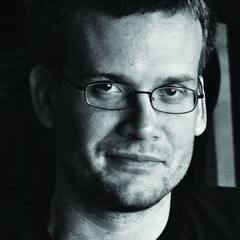
John Green
John Green

John Green is an American author known for his young adult literature. His works often explore themes such as adolescence, love, family, and identity, and have gained popularity among young readers. Green's books have won numerous literary awards and have become bestsellers. more

You May Also Like

“Her body accepted my brutal seed and took it to swell within, just as the patient earth accepts a falling fruit into its tender soil to cradle and nourish it to grow. Came a time, just springtime last, our infant child pushed through the fragile barrier of her womb. Her legs branched out, just as the wood branches out from these eternal trees around us; but she was not hardy as they. My wife groaned with blood and ceased to breathe. Aye!, a scornful eve that bred the kind of pain only a god can withstand.”

“Where have you been?" I asked weakly. A few minutes ago I would have rather died than questioned him. Let him know I care. But I'm too sick to be strong, kick ass Rayne at the moment. "Vegas" he says. I raise an eyebrows. "Uh, okay. Win anything?" I can't believe he was off gambling as I lay dying. I mean, I know poker is hot and all, but couldn't he have waited a couple of days for that straight flush? "I got what I went for, if that's what you mean." "What, a lap dance?" He chuckes. "Even sick, you're still funny, Rayne.”

“I wanted to ask my father about his regrets. I wanted to ask him what was the worst thing he'd ever done. His greatest sin. I wanted to ask him if there was any reason why the Catholic Church would consider him for sainthood. I wanted to open up his dictionary and find the definitions for faith, hope, goodness, sadness, tomato, son, mother, husband, virginity, Jesus, wood, sacrifice, pain, foot, wife, thumb, hand, bread, and sex. "Do you believe in God?" I asked my father. "God has lots of potential," he said. "When you pray," I asked him. "What do you pray about?" "That's none of your business," he said. We laughed. We waited for hours for somebody to help us. What is an Indian? I lifted my father and carried him across every border.”

“Every sign, linguistic or nonlinguistic, spoken or written (in the usual sense of this opposition), as a small or large unity, can be cited, put between quotation marks; thereby it can break with every given context, and engender infinitely new contexts in an absolutely nonsaturable fashion. This does not suppose that the mark is valid outside its context, but on the contrary that there are only contexts without any center of absolute anchoring. This citationality, duplication, or duplicity, this iterability of the mark is not an accident or anomaly, but is that (normal/abnormal) without which a mark could no longer even have a so-called “normal” functioning. What would a mark be that one could not cite? And whose origin could not be lost on the way?”